Norway Warns NATO of Growing Russian Threat in the Arctic

Russia's Arctic Threat: A New Flashpoint for NATO
According to Главком: Norwegian Defense Minister Tore Sandvik has raised alarms over Russia's aggressive military buildup in the Arctic, warning that it poses fresh challenges for NATO. If Moscow gains control over critical sea lanes, it could deploy hypersonic weapons in the region, a prospect that deeply worries Western nations. Sandvik emphasized that the Arctic has already become a potential flashpoint for escalation. The region's strategic importance has grown in recent years due to melting ice caps opening new shipping routes and resource access.
Russia has stationed a significant portion of its nuclear arsenal in the Arctic, while simultaneously expanding its military presence in the Arctic Ocean and bolstering the capabilities of its Northern Fleet. Russian submarines have been detected near the territorial waters of NATO member states, highlighting Moscow's increasing activity in this strategically vital area. Of particular concern is the strategic maritime corridor between mainland Norway and the Svalbard archipelago, which could become a key theater for military operations.
Emerging Threats and NATO's Response
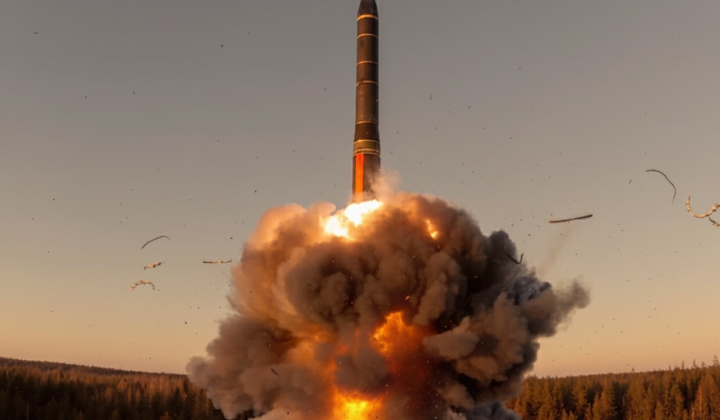
Among the latest threats are Russia's hypersonic 'Tsirkon' missiles, which can be equipped with nuclear warheads. Additionally, Russia continues to develop the 'Poseidon' nuclear-powered unmanned underwater vehicle. These technologies raise the threat level for NATO members, who control two of the three major maritime routes: the Bosporus Strait and the Danish straits.
Tore Sandvik noted: 'If Russia gains control of this territory, the range of its hypersonic missiles will cover London, Norway, and Denmark.'
This underscores the gravity of the situation and the urgent need to address these new challenges. In response, NATO's rapid reaction corps, led by the United Kingdom, has already deployed an underground command center at the Charing Cross tube station platform in London.
The Arctic strait is emerging as a new line of strategic confrontation, and NATO is working to maintain control over key sea lanes to ensure regional security. Given unfolding developments, the Arctic will remain a central focus for the international community.
Russia's heightened military activity in the Arctic is causing serious concern among NATO countries, as control over key maritime routes could significantly alter the regional balance of power. NATO's response-including the deployment of rapid reaction forces-signals the alliance's intent to ensure stability and security in the Arctic, a priority that grows increasingly critical amid global tensions. The situation demands continuous monitoring and international cooperation to prevent conflict escalation.
As NATO grapples with the implications of Russia's military escalation in the Arctic, it's essential to consider the broader context of regional security. The increased activity from both Russia and China has prompted a collaborative response from the seven Arctic nations, who are enhancing their defense strategies to counter emerging threats. For more insights on this critical development, explore how these countries are fortifying their security in response to heightened tensions amid growing geopolitical challenges.

Read also