Paleontologists Announce Newly Identified Extinct Armadillo Species

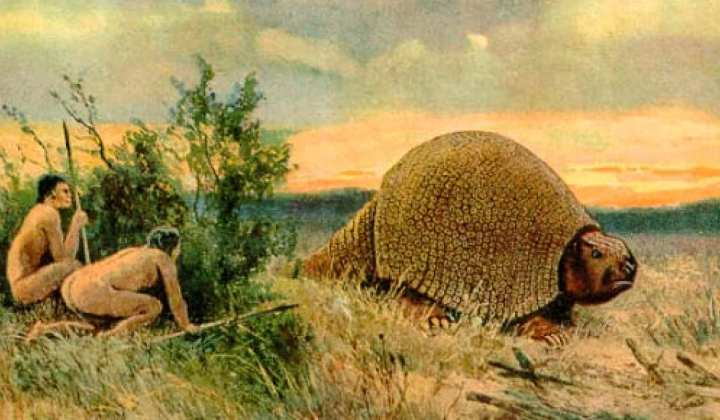
A Fragmentary Skull Points to a New Species of Extinct Armadillo
According to НВ — Техно: A research team has formally recognized a new extinct armadillo species, Glyptotherium deuterophractum, from an incomplete fossil skull held in the Museum of Natural History of Denmark. This animal inhabited a region ranging from Brazil to Venezuela roughly 60,000 to 17,000 years ago. Glyptodonts, the extinct armored relatives of contemporary armadillos, are among the most striking megafauna that once roamed South America.
The specimen was originally uncovered in the caves of Lagoa Santa by Danish naturalist Peter Wilhelm Lund during the 19th century. In 1875, Johannes Reinhardt assigned it to the species Schistopleurum euphractum. The new analysis, however, confirms that it actually belongs to a distinct lineage.
Led by Dr. Edison Vicente Oliveira and his colleagues, the study examined the skull, teeth, ankle bones, and osteoderms, comparing these elements with known glyptodont species from North and Central America. As Oliveira commented,
“Among the Xenarthra mammals documented from Brazil's Pleistocene deposits, giant sloths and glyptodonts are especially prominent in the fossil record.”
Distribution and Ecology of Glyptotherium deuterophractum
Glyptotherium deuterophractum belongs to the glyptodonts, an extinct group of heavily armored mammals related to today's armadillos; some of these creatures reached the size of a small car. Its known range includes several Brazilian states:
- Minas Gerais
- São Paulo
- Rio Grande do Norte
- Pernambuco
- Piauí
- Alagoas
- Tocantins
- Amazonas
The researchers note,
“Glyptotherium deuterophractum has been found in southeastern Brazil in the states of Minas Gerais and São Paulo; in northeastern Brazil in Rio Grande do Norte, Pernambuco, Piauí, and Alagoas; and in northern Brazil in Tocantins and Amazonas.”
The recognition of this species underscores the need for more detailed comparisons between Brazilian and Venezuelan fossils and the related Glyptotherium cylindricum. It also enriches our knowledge of armadillo evolutionary history and the environmental conditions of Pleistocene South America.
Identifying Glyptotherium deuterophractum marks an important advance in understanding glyptodont evolution and their role in South American ecosystems. The evidence suggests these large mammals were geographically widespread, pointing to a variety of ecological niches. Future research may clarify how climate and environmental changes influenced their development and eventual extinction. This find also highlights the importance of paleontological collections, which preserve traces of the deep past and keep opening fresh avenues for scientific inquiry.
In addition to the fascinating discovery of newly identified dinosaur species in New Mexico, the ongoing research in paleontology continues to unveil remarkable insights into prehistoric life. The findings surrounding Glyptotherium deuterophractum not only highlight the diversity of extinct megafauna but also enhance our understanding of their ecological roles during the Pleistocene era.

Read also