Over 250 Titanosaur Eggs Dating Back 66 Million Years Unearthed in Southern Patagonia

Remarkable Discovery of Titanosaur Eggshells
According to НВ — Техно: Scientists have uncovered more than 250 fragments of titanosaur eggshells in the Chorrillo Formation of southern Patagonia. These fossils date to approximately 66 million years ago, placing them in the late Cretaceous period. The eggs, roughly the size of a soccer ball, belong to the Fusioolithus group. This site represents one of the southernmost known locations where dinosaur eggs have been found, situated near 55−60 degrees south latitude.
How Titanosaurs Adapted to Harsh Environments
Researchers from the University of Tsukuba in Japan suggest that these eggs were laid by giant long-necked titanosaurs. Southern Patagonia’s environment was characterized by cooler temperatures and significantly shorter winter daylight hours. Notably, no geothermal heat sources were detected nearby, and the massive titanosaurs would have been unable to keep their nests warm through body heat alone.
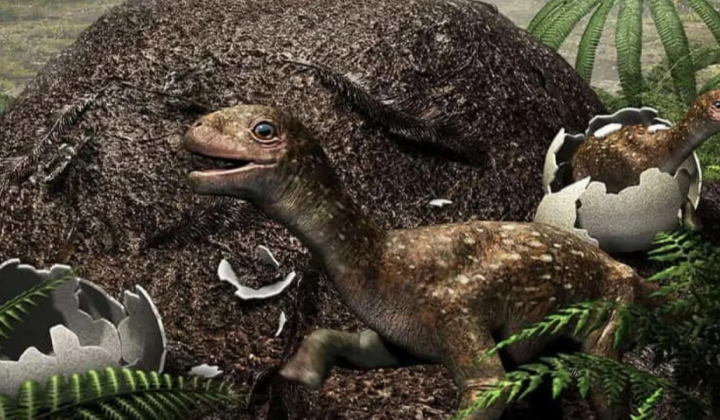
The eggshells exhibit very large pores, a feature typical of eggs that are fully buried underground. This implies that titanosaurs likely constructed nests by covering their eggs with plant material. As this organic matter decomposed, microbial activity would generate heat, effectively creating a natural incubator. This reproductive strategy resembles that of modern-day marine crocodiles and megapode birds, highlighting fascinating evolutionary parallels in species adapting to diverse environmental conditions.
Beyond expanding our knowledge of titanosaur behavior, these findings shed light on how dinosaurs adapted their reproductive strategies to challenging ecosystems. The discovery also suggests potential complex social behaviors within these dinosaur groups, opening new avenues for studying evolutionary adaptations in reproduction. Such research emphasizes the critical role of paleontological discoveries in reconstructing ancient ecosystems and understanding their influence on contemporary species.
In addition to these remarkable findings, recent discoveries have also highlighted the fascinating interplay between ancient species and their environments. For instance, the recent uncovering of a feather from an extinct water bird within fossilized Tyrannosaur droppings underscores the intricate relationships that existed among prehistoric creatures. Such revelations not only enhance our understanding of the ecosystems of the past but also illustrate the complexities of dinosaur life during the late Cretaceous period.

Read also