Russian Delegation Admitted to PACE: Which Democratic Figure Refused to Sign Pro-Ukraine Statement

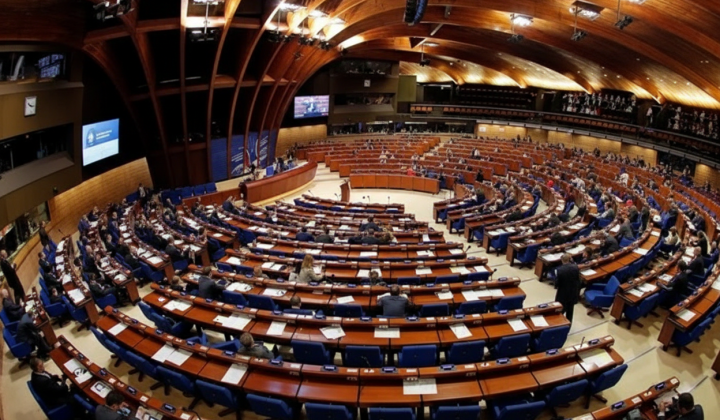
Russian Delegation and the Parliamentary Assembly of the Council of Europe
According to Главком: In late January 2026, the Parliamentary Assembly of the Council of Europe (PACE) approved the participation of a Russian delegation in its work. Concurrently, a platform for dialogue with Russian democratic forces was established, and its participants issued a pro-Ukraine statement. All members of this platform signed the document, with the sole exception of Russian public activist Lyubov Sobol.
Delegation Composition and the Pro-Ukraine Statement
The Russian delegation comprises the following notable figures:
- Natalia Arno
- Dmitry Gudkov
- Mark Feygin
- Vladimir Kara-Murza
- Garry Kasparov
- Mikhail Khodorkovsky
- Oleg Orlov
- Lyubov Sobol
- Nadezhda Tolokonnikova
- Andrey Volna
It is noteworthy that Andrey Volna has been assisting wounded Ukrainian defenders in Kyiv for over two years.
In their pro-Ukraine declaration, the platform's participants emphasized the critical importance of supporting Ukraine's security and defense capabilities, including military aid, as an integral part of countering Russian aggression. They also stated that Ukraine's territorial integrity is defined by its internationally recognized borders as of 1991. Furthermore, the participants expressed the view that any cessation of hostilities must be accompanied by the immediate return to Ukraine of civilian hostages and illegally deported children, as well as the release of individuals imprisoned in Russia for opposing the invasion of Ukraine.
Consequently, the Russian delegation's participation in PACE has elicited mixed reactions, particularly regarding the signing of the pro-Ukraine statement, which only Lyubov Sobol declined to endorse.
The involvement of the Russian delegation in PACE and its stance on supporting Ukraine highlights the complex dynamics of international politics, especially within the context of Russia's ongoing war against Ukraine. This move represents a significant, albeit controversial, diplomatic development for the Council of Europe.
The adoption of the pro-Ukraine statement reflects the desire of activists and delegation members to support Ukraine despite internal disagreements. While this may indicate a potential for dialogue among different political forces, it also raises questions about the practical effectiveness of such dialogue in resolving the conflict. Observers will be closely monitoring subsequent steps in this matter and the international community's response to these events.

Read also