Abu Dhabi Talks: Russia's Arctic Ambitions and the Looming Economic Crisis

Key Issues on the Abu Dhabi Agenda
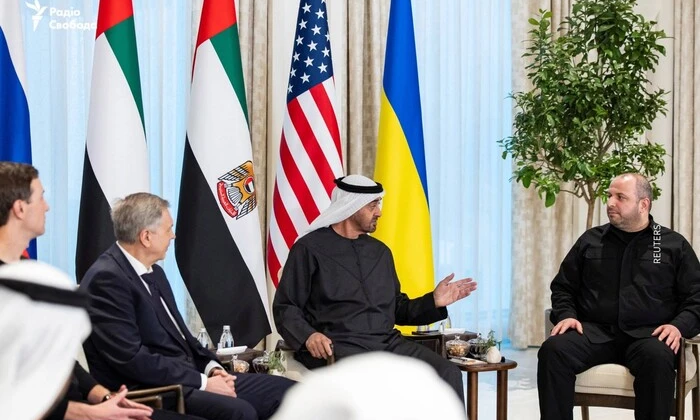
According to Главком: The Abu Dhabi negotiations are addressing critical aspects of ending the war, including matters concerning the Arctic, sanctions, China's role, and Russia's economic resilience. The Arctic region represents a major strategic asset for Russia, yet the country faces significant challenges in fully capitalizing on it. For instance, Russia lacks the capability to produce the icebreakers essential for operations in harsh Arctic conditions and has limited resources for processing rare earth elements. These shortcomings hinder its ability to exploit the region's vast resources, despite their immense importance.
Economic Pressures and China's Calculated Role
During these talks, Russian President Vladimir Putin is demanding the lifting of sanctions that are crippling the nation's economy. The United States, for its part, asserts that the European market should remain under its influence and that Europe is not prepared to readmit Russian companies. Analysts suggest a weakened Russia is seen as advantageous to the US, EU, and China, as a prolonged war continues to drain its strength.
China, meanwhile, is unlikely to play an active role in brokering an end to the conflict until it becomes beneficial for Beijing or until it secures recognition as an equal partner to the United States. An economic crisis in Russia is forecast for mid-2027, contingent on two converging factors: unfavorable oil market conditions and the continued accumulation of serious governance failures. A negative oil market scenario is characterized by low prices and a crackdown on the shadow fleet used to circumvent sanctions, which could further destabilize the country's finances.
In a recent development, 15 nations have announced the closure of the Baltic Sea, a move with potential repercussions for regional security and trade. A window of opportunity for diplomatic progress may open in April-May, following planned talks between US and Chinese leaders. Thus, the outcome in Abu Dhabi is a significant factor shaping the future not only for Russia but for the global economic order.
The Abu Dhabi negotiations underscore the complex geopolitical predicament Russia finds itself in, highlighting its dependence on external factors to overcome its mounting economic difficulties.
The strategic importance of the Arctic remains a central focus; however, the challenges Russia faces could severely impact its ability to realize its ambitions there. The removal of sanctions and stability in global markets remain critically important for the country's future economic prospects. The talks occur against a backdrop of heightened global tension, where energy security and supply chains are paramount concerns for Western nations.

Read also