Lithuanian President Revokes State Award from Former Ukrainian Minister Tabachnyk

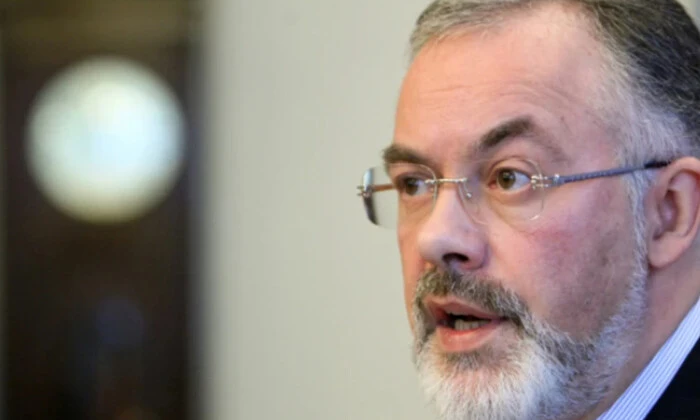
Former Ukrainian Education Minister Stripped of Lithuanian Honor
According to Главком: Lithuanian President Gitanas Nausėda has revoked a state award from Dmytro Tabachnyk, a former Ukrainian Minister of Education. This decision reflects evolving relations between Ukraine and Lithuania and a reassessment of Tabachnyk's past merits. He originally received the Order of the Grand Duke Gediminas, 2nd Class, in 1996 for his contribution to developing cross-border relations between the two nations while serving as head of administration for then-Ukrainian President Leonid Kuchma. This move is part of a broader regional reassessment of historical political figures and their alignment with current democratic values.
As a result of the presidential decree, Dmytro Tabachnyk is now obligated to return the order. President Nausėda's action signals a shift in attitude toward former officials whose past actions may no longer align with the contemporary standards and values promoted in both Ukraine and Lithuania.
A Shifting Political and Cultural Landscape
This is not an isolated incident, as both Ukraine and Lithuania are undergoing significant political and cultural transformations. Recent years have seen various controversial initiatives, including:
- An attempt to publish in the newspaper 'Uryadovyi Kuryer' a Central Election Commission resolution declaring Viktor Yanukovych the winner of a presidential election.
- The disappearance of unique documents from the state archive in Lviv.
- The nationwide social campaign 'Zir,' which involved the free distribution of cheap, Chinese-made eyeglasses to war veterans.
President Nausėda's decision underscores the changing political landscape in Lithuania and Ukraine and demonstrates both nations' commitment to upholding democratic principles. The revocation of the former minister's award can be interpreted as a move away from a legacy deemed incompatible with modern realities. This action may also influence future bilateral relations, highlighting the importance of adapting to new societal challenges and expectations.

Read also