Putin Eyes Former German Chancellor Gerhard Schröder as Mediator in Ukraine Talks

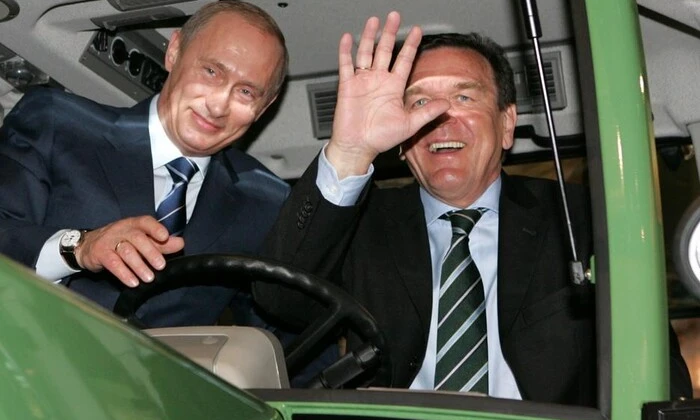
Gerhard Schröder's Potential Role in Ukraine Peace Negotiations
According to Главком: Russian President Vladimir Putin has signaled his desire to appoint former German Chancellor Gerhard Schröder as a mediator in discussions surrounding the war in Ukraine. This development was first reported by German outlet Deutsche Welle, citing Ukrainian media source Glavcom. Schröder, who led Germany's center-left Social Democratic Party, served as chancellor from 1998 to 2005 and has maintained close ties with Russia for over two decades.
Schröder's relationship with Putin dates back to 1998, and in 2014 he attended the Russian president's birthday celebration in Moscow. He endorsed the construction of the first Nord Stream gas pipeline before 2005 and joined the board of directors for the Nord Stream 2 project in 2016. However, the latter initiative was halted following Russia's full-scale invasion of Ukraine in 2022. That same year, Schröder traveled to Moscow to meet with Putin, where they discussed a "negotiated settlement" for Ukraine. In January 2024, Schröder acknowledged that Russia's invasion violated international law, as reported by Berliner Zeitung.
Backlash and Rejection of Putin's Proposal
Schröder's stance has drawn significant criticism in Germany. In May 2022, the Bundestag's budget committee stripped him of his right to a publicly funded office and staff. He was also slated to join Gazprom's supervisory board in 2022 but declined the position. Prominent German politicians have voiced concerns over his ongoing connections to Russia. One lawmaker remarked:
"Gerhard Schröder takes money from Putin. He is still a former chancellor of Europe's most powerful country. But now he is Putin's henchman, defending murderers."
Another politician added that Schröder's position on the case of Alexei Navalny-who died in a Siberian prison in early 2024-brings shame to many Germans.
The German government has outright rejected Putin's suggestion to involve Schröder as a mediator. Putin has expressed willingness to hold direct talks with Ukrainian President Volodymyr Zelenskyy, but only once a peace treaty is ready for signing. For his part, Schröder has expressed hope that "maybe this can still help us find a negotiated solution; I see no other way out." He also emphasized that "it is obvious that the war cannot end with the complete defeat of one side or the other" and voiced opposition to "the demonization of Russia as an eternal enemy."
Putin's push to position Schröder as a mediator reflects Moscow's efforts to explore alternative negotiation channels, despite widespread criticism and rejection from Berlin. The situation underscores the complexities of international diplomacy and the challenge of seeking compromise amid the ongoing war in Ukraine. The sharply divided opinions within Germany about Schröder highlight deep disagreements over how to view Russia and how best to approach conflict resolution.
In light of the ongoing geopolitical tensions, the situation in Ukraine remains fluid, with various countries navigating their diplomatic stances. While Russia seeks to re-establish dialogue through figures like Schröder, Germany's commitment to maintaining its embassy in Kyiv despite threats underscores a different approach. This steadfastness reflects the broader implications of international relations in the region, as highlighted in a recent article about Germany's refusal to evacuate its embassy amid escalating threats. For more insights on Germany's diplomatic strategies, read more here.

Read also