Russia and China Veto UN Security Council Resolution on Strait of Hormuz

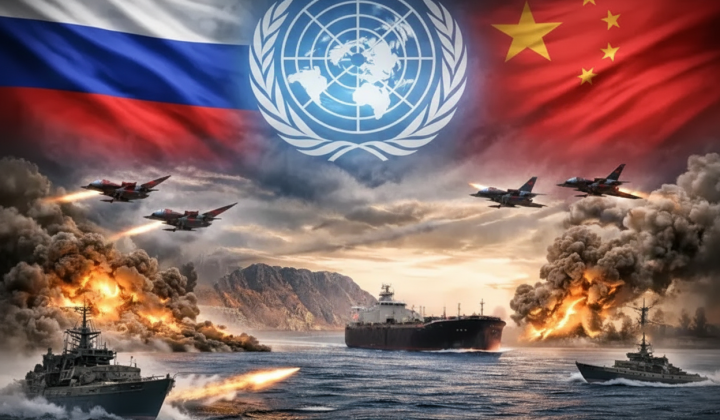
UN Security Council Fails to Pass Strait of Hormuz Resolution
According to Главком: A UN Security Council resolution, proposed by Bahrain, calling for the opening of the Strait of Hormuz was blocked by vetoes from Russia and China. The vote saw 11 Council members in favor, while Pakistan and Colombia abstained. The Strait of Hormuz is a critical global chokepoint for oil and gas shipments and is currently under Iranian control. This strategic waterway sees about one-fifth of the world's oil supply pass through it daily.
International Reactions to the Veto
Bahrain's Foreign Minister, Abdullatif bin Rashid Al Zayani, stated that the Security Council's inaction sends 'the wrong message to the world.' For his part, U.S. envoy to the UN, Mike Waltz, argued that 'the Strait of Hormuz is too vital to the world to be held hostage,' adding that 'most member states need it more than the United States.'
U.S. President Donald Trump has called on Iran to open the strait, threatening military strikes. Over five weeks, the U.S. has spent between $22.3 and $31 billion on its military operation against Iran. In response, Iran's UN Ambassador, Amir Saeid Iravani, declared that
normalizing the use of force is unacceptable
and emphasized that
in front of the international community, the President of the United States is shamelessly and blatantly threatening to destroy Iran's civilian infrastructure
.
Pakistan's Prime Minister, Shahbaz Sharif, proposed a two-week ceasefire and the opening of the Strait of Hormuz, which could be a significant step in reducing regional tensions. This impasse leaves critical questions about the security and stability of global energy supplies unresolved and urgently needing attention.
The UN Security Council's failure to pass the resolution underscores the complexity of international diplomacy and the paramount importance of this strategic waterway to the global economy. Continued tensions between Iran, the U.S., and other nations risk destabilizing world energy markets. While Pakistan's ceasefire proposal offers a potential diplomatic opening, its success depends entirely on the willingness of all parties to compromise.
The ongoing tensions surrounding the Strait of Hormuz have prompted Pakistan to advocate for a two-week extension of the deadline for Iran, alongside calls for the reopening of this vital waterway. This move could potentially ease regional conflicts and address the urgent concerns over global energy security. For further insights into Pakistan's diplomatic efforts and the implications for international relations, see Pakistan's push for a ceasefire and the Strait of Hormuz reopening.

Read also