Complex Construction Revealed in 3,000-Year-Old Gold Artifact Restored in Germany

Bronze Age Ornament Unveils Unexpected Craftsmanship in Ancient Burial Find
According to НВ — Техно: Publication Date: October 27, 11:33
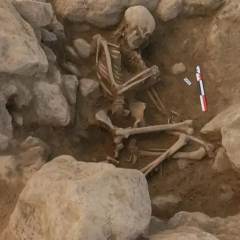
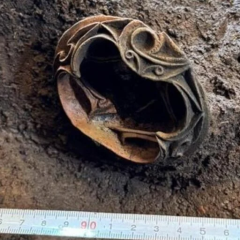
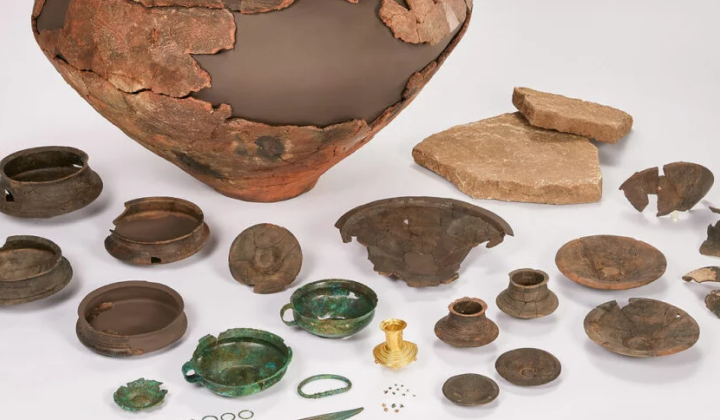
During restoration work on a 3,000-year-old gold artifact excavated from a Bronze Age burial site in Albisheim, Germany, researchers uncovered a far more intricate design than previously assumed. This artifact, discovered beneath a bronze bowl, contains traces of adhesive, tiny nails, and organic materials, pointing to sophisticated manufacturing techniques. The burial site, dating back to the 12th–11th centuries BCE, also yielded over 24 ceramic vessels alongside objects made of bronze and precious metals. Excavations were conducted by archaeologists from GDKE in Speyer between 2023 and 2025.
The artifact’s complexity caught the attention of researchers when microscopic nails, remnants of glue, and organic residues were identified, indicating advanced craftsmanship. The metal components were originally bonded to an organic substance that has since deteriorated. As Dr. Ulrich Himmelmann explains,
“Examining tiny tool marks and material residues is crucial for reconstructing ancient production methods.”
Experts believe the artisan integrated a patterned design into a thin metal sheet from the inside. Compared to other burial sites, this grave stands out due to its abundance and variety of items. Over 850 archaeological artifacts spanning different periods were documented during the excavation.
Future Research Directions
Further scientific analysis is planned to investigate the organic remnants, adhesive substances, and cord-like structures found on the artifact, alongside comparisons with other archaeological finds. Additionally, in 2026, a Celtic burial site dating to the 5th century BCE was discovered near Bad Camberg. This grave contained gold, chariot remains, and an Etruscan bronze jug. The excavation was prompted by construction work on a solar power plant near a highway, where aerial surveys revealed two parallel lines converging into a circle with a dark rectangle at its center.
These discoveries in Albisheim and Bad Camberg highlight the rich cultural heritage and technological sophistication of ancient societies in present-day Germany. The complexity of artifact production and the diversity of burial customs provide valuable insight into the social and cultural frameworks of these communities. Ongoing research promises to deepen our understanding of their history and interactions with neighboring cultures.
The recent discovery of intricate craftsmanship in a 3,000-year-old artifact highlights the advanced techniques used by ancient artisans. Similarly, a recent find of rare axes made from deer antlers in Sweden underscores the sophistication of Bronze Age tool-making across different regions. These artifacts not only reflect the artistry of their creators but also provide valuable insights into the cultural practices of the time.

Read also