Rare 4th Century BC Bronze Helmet Unearthed at Iron Age Fortified Site in Poland

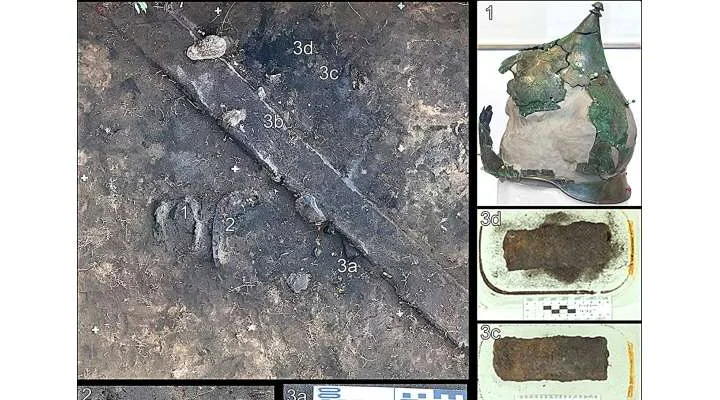
Discovery of a Bronze Helmet at Lysa Gora
According to НВ — Техно: In northeastern Poland, the fortified Iron Age settlement of Lysa Gora revealed an extraordinary find: a rare bronze helmet of the Berru type dating back to the 4th century BC. This helmet stands out as the only known example of its kind found beyond the traditional Celtic homelands. Lysa Gora, situated between the Ozyce River and a nearby lake, was inhabited roughly from the 6th to the 4th centuries BC. Archaeological excavations at this site spanned from 1971 to 1992, with recent studies uncovering nearly 80 artifacts attributed to the La Tène period.
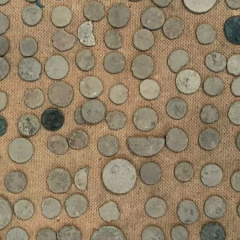
Approximately 2,400 years ago, the bronze helmet was deliberately smashed and discarded into a pit using iron chisels and a sickle, providing valuable insight into cultural interactions of the time. Alongside the helmet, archaeologists uncovered about 31 La Tène-style brooches and ring ornaments, nearly 350 metal objects, amber beads, and an unfinished amber ring. Among the finds was also a bronze coin, likely minted under the Thracian king Seuthes III.
Significance of the Archaeological Research
Lysa Gora’s location near the Kurpie amber region and trade routes leading to the Sambian Peninsula suggests the settlement functioned as a key trading post. Bartlomiej Kaczynski, a leading researcher, emphasized that
“the helmet symbolizes authority and serves as direct evidence of long-distance cultural connections.”
Historical records further imply that the area may have been involved in the trade of enslaved individuals.
Continuing archaeological efforts in the region have brought additional discoveries. In August 2026, near the village of Miejsce, a collection of artifacts was recovered, including a Roman silver coin, a bronze bracelet, a spearhead, and fragments of jewelry. These findings, uncovered by the 'Bats' research team during field surveys around Miejsce, underscore the ongoing importance of this area in understanding ancient cultural networks.
The unearthing of the Berru-type bronze helmet at Lysa Gora highlights the region’s crucial role in exploring Celtic culture and its interactions with neighboring peoples. This discovery enriches our knowledge of Celtic material culture and opens new avenues to study their trade routes and social structures. As excavations continue, further artifacts may emerge, shedding light on the complex cultural exchanges of ancient times.
The recent discovery at Lysa Gora adds to a growing body of evidence regarding ancient cultural exchanges in the region. Similarly, findings near Weżbica, where bronze artifacts linked to the Scythians were unearthed, highlight the rich historical tapestry of Poland during the 8th to 5th centuries BCE. These artifacts not only enhance our understanding of trade networks but also illustrate the diverse influences that shaped ancient societies. For more insights on these remarkable findings, see our coverage of the bronze artifacts associated with the Scythians.

Read also