Ireland's Coastal Sea Levels Experience Fastest Rise Since 1925, Accelerating Dramatically After 2000

New Insights into Ireland's Rising Sea Levels
According to НВ — Техно: Researchers from Maynooth University have meticulously reconstructed a century-long record of sea level measurements along Ireland’s coastline. Their findings reveal that sea levels are climbing at the fastest pace observed since 1925, with a significant acceleration emerging after the year 2000. This study was carried out by the ICARUS Climate Research Centre in partnership with the University of Limerick, University College Cork, and Trinity College Dublin.
Key Findings from the Study
The investigation analyzed tide gauge data collected from six locations, including:
- Cork
- Tarbert
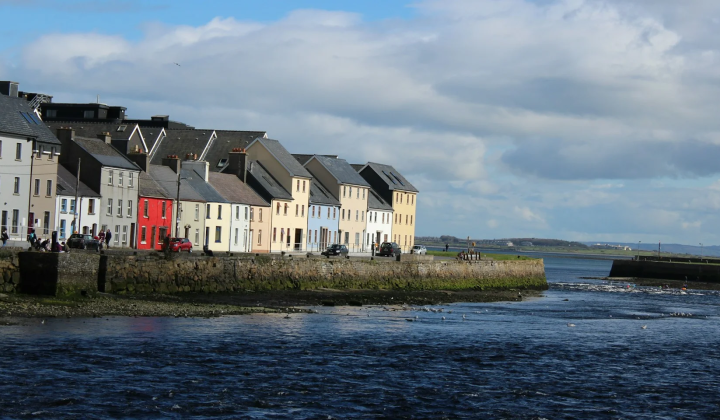
- Galway
Between 1925 and 2024, Belfast recorded the lowest sea levels, while Tarbert in County Kerry showed the highest measurements. The researchers also compared these local trends with global data, confirming a worldwide pattern of sea level rise that has intensified since the 1990s.
"Sea levels are rising more rapidly, and grasping the nuances of this acceleration-especially regional differences-is critical for future coastal planning."
Patrick McLaughlin
The study highlights the climate-driven sea level increase as a returning challenge for Ireland. Gerard McCarthy emphasized, “This landmark publication clearly demonstrates that climate change-induced sea level rise is coming back to Ireland like a boomerang.”
These findings are crucial for understanding how climate change impacts Ireland’s coastal zones, aligning with similar trends observed worldwide. By identifying local variations in sea level changes, the research supports the development of targeted adaptation strategies to protect coastal communities and infrastructure. Furthermore, it underscores the importance of ongoing monitoring to track climate effects and prepare for their consequences on both people and ecosystems.
As Ireland grapples with the implications of rising sea levels, it is essential to consider the broader global context of climate change. Similar shifts are occurring in other regions, such as the Indian Ocean, where seasonal CO₂ absorption changes are also impacting climate dynamics. Understanding these interconnected patterns can provide valuable insights for effective coastal management and adaptation strategies.

Read also