New Russian Military Infrastructure Emerges Along NATO Borders

Analysis of Russia's Military Infrastructure
According to Главком: An investigation by journalists from Sweden's SVT, Norway's NRK, Denmark's DR, and the Estonian edition of Delfi, based on satellite imagery from Planet Labs, reveals that Russia is actively constructing new military infrastructure along its borders with Norway, Finland, the Baltic states, and the Kaliningrad region during 2025-2026. This buildup, occurring amid rising tensions between Russia and NATO, signals an acceleration in military development.
Construction of New Facilities
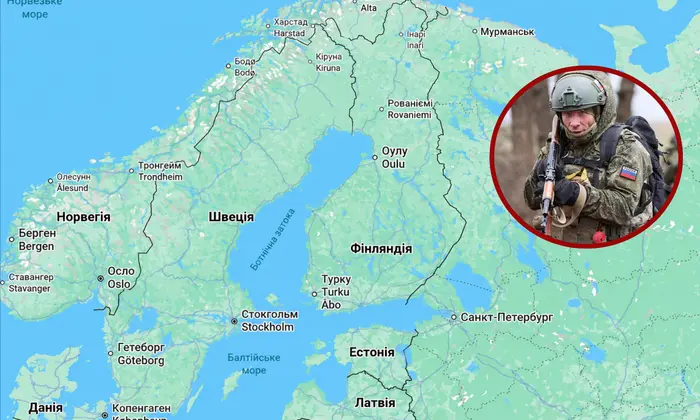
The satellite images show new barracks, ammunition depots, and vehicle staging areas on Russian territory. They also capture cleared forests, demolished old buildings, hundreds of new barracks, sealed storage sites, and columns of military vehicles. Former Finnish intelligence officer Marko Eklund estimates that troop numbers on the border with Northern Europe could reach 115,000. According to him, a key development site is in the Pechenga Valley (Petsamo) on the Kola Peninsula, just 10 kilometers from the Norwegian border. The capacity of the base there could increase from 7,000 to 17,000 soldiers, with the largest brigade in the area already expanded to division size.
- On the Finnish frontier, active construction is underway in the cities of Petrozavodsk and Sapyorne, as well as in Kirillovskoye, located 70 kilometers from the Finnish border.
- Additionally, modernization is taking place at the base in Kandalaksha on the White Sea coast.
- In the southwestern direction, activity has been recorded in Luga near Pskov and in Baltiysk, part of the Kaliningrad region.
General Pasi Välimäki, commander of Finland's army, suggested that up to 80,000 troops could be concentrated in Russia's border region. According to estimates from Sweden's military intelligence agency MUST, Russia's total armed forces number 1.5 million personnel. NATO Major General Brian Nissen noted that the direct threat to NATO remains low while Russia continues its military operations in Ukraine.
Eklund, who monitors 19 sites along Russia's 2,424-kilometer border with Northern Europe, emphasized that the infrastructure buildup is not merely a show of force. 'We do not believe this is being built just for demonstration. It is about preparing for a potential confrontation with NATO in a larger conflict,' he stated.
Expert Eirik Kristoffersen also weighed in, saying, 'We expect that after the war in Ukraine, there will be a different Russia on our border.' Meanwhile, Russian expert Sergei Karaganov stressed, 'NATO needs to be thrown onto the ash heap of history. Our patience is running out, and then we will escalate.'
The analysis of Russia's military infrastructure construction along its borders with Northern European countries points to a possible strengthening of military presence in the region, which could shift the balance of power amid tensions between Russia and NATO. Given the numerous assessments of military strength and activity, such an escalation may become a critical factor in future relations between these parties. Events in Ukraine also influence military strategies and preparations, indicating potential changes in Europe's security architecture.
As tensions escalate, understanding the broader implications of Russia's military buildup is crucial. Recent intelligence reports suggest that Russia may be preparing to launch an offensive against NATO by 2030, highlighting the urgency of these developments along the borders. This context sheds light on the strategic significance of the new facilities being constructed, emphasizing the potential threat to regional stability.

Read also