Russia's Business Landscape Transforms: The Impact on Millions

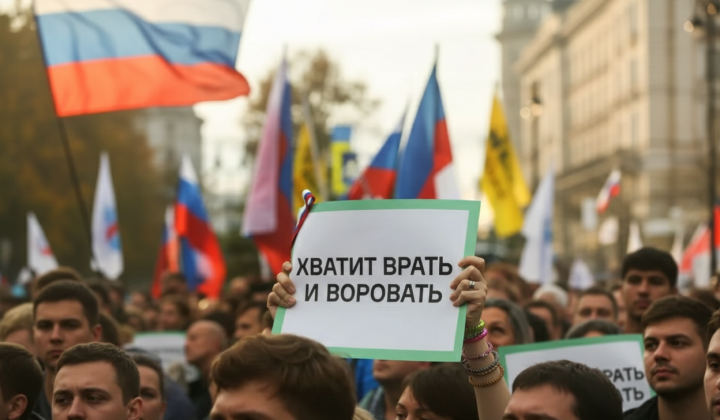
Assessing Russia's Socio-Economic Climate Amidst the War
According to Главком: An analysis of Russia's social and economic conditions during the ongoing conflict reveals a state of significant turbulence within society. For the first time since the war began, the population is experiencing profound discontent, driven by three primary factors:
- A sharp decline in the standard of living for a large segment of the population,
- The loss of hope for a swift end to the war,
- A pervasive lack of clarity about the future.
These circumstances are compelling the state to alter its policies toward business and forge new societal agreements. This shift is occurring as the Kremlin seeks to manage the economic fallout from international sanctions and military expenditure.
Policy Shifts and Their Consequences
The Russian government has pivoted from a policy of relative business freedom in 2022 to one of maximal control and asset redistribution. This renegotiation of the social contract with both the populace and the business community underscores the state's intent to maintain a firm grip on the nation's economic situation. The rewriting of these rules is expected to continue at least until the end of the year. Among the new trends is the precedent of returning to state ownership assets that were privatized as far back as 1993, a move generating considerable anxiety among entrepreneurs.
Despite the widespread dissatisfaction, there are currently no preconditions for revolutionary change in Russia. The main reasons for this are:
- The absence of a unifying leader or leadership,
- A lack of a clear, alternative idea or ideology,
- A powerful fear of the state's overwhelming authority.
These factors severely complicate the potential for organizing mass protests or opposition movements. It is also notable that, in a comparison with North Korea, Russia similarly lacks a clear political successor, and its population demonstrates far lower levels of mobilization.
Consequently, the situation in Russia remains tense, marked by clear signs of socio-economic turbulence that could have serious long-term consequences for the country. Amidst growing state control and a lack of clarity in economic policy, the population is left in a state of uncertainty regarding its future.
The current socio-economic challenges point to potential long-term effects on state stability. Policy changes focused on control and resource redistribution may lead to a further escalation of social tension. In the absence of an adequate response from the authorities, this situation could act as a catalyst for new crises, ultimately eroding public trust in state institutions.
The current socio-economic upheaval in Russia is further highlighted by the recent announcement of a 2.1% decline in GDP, marking the first contraction since 2023. This development underscores the profound implications of the government's tightening grip on the economy and its impact on the populace. For a deeper understanding of the economic challenges facing the nation, explore the details in our article on the recent GDP drop.

Read also