Kremlin Threatens Massive Strikes on Kyiv Following Incident in Luhansk

Military and Diplomatic Landscape in Ukraine
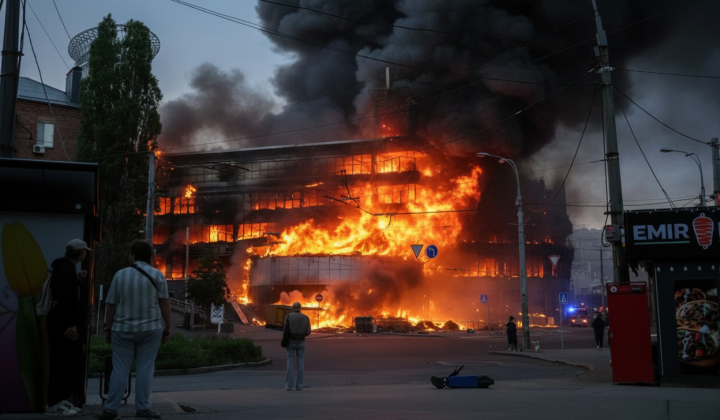
According to Главком: As of the time of publication, the military and diplomatic situation in Ukraine is marked by renewed threats from Russia, which has warned of an escalation of strikes on Kyiv. These threats follow an incident involving a strike on a college dormitory in the Russian-controlled Luhansk region, which Moscow claims killed 21 students. Russia has blamed Ukraine for the attack, but the Ukrainian government has dismissed these allegations as disinformation. Russia’s Foreign Ministry has stated that its patience is exhausted, signaling a potential intensification of the conflict. This comes amid ongoing tensions that have kept the region on edge for months.
Diplomatic Efforts and Reactions
Russia’s military advances in May have slowed, a trend that analysts have been discussing. Expert Tatiana Stanovaya noted that
“the military advantage Russia has maintained over the past few years is likely beginning to gradually diminish”
. She also emphasized that debates are emerging about the possibility of raising the level of escalation. Meanwhile, the Trump administration’s willingness to mediate the conflict in Ukraine has waned, as it has lost interest in the issue, and the diplomatic process has been deeply frozen since late February.
At the same time, Poland and Germany have summoned Russian diplomats in response to threats against foreigners. European partners continue to support Ukraine, having approved a $106 billion loan last month. Russian Foreign Minister Sergey Lavrov held a phone conversation with U.S. Secretary of State Marco Rubio, during which regional security issues were discussed. It is worth recalling that a summit between Moscow and Washington took place in Alaska last year, but its agreements were never disclosed.
In the Russian State Duma, the head of the foreign affairs committee, Leonid Slutsky, has called for strikes on Kyiv, Boryspil Airport, and railway bridges across the Dnipro River, underscoring the Kremlin’s intent to project strength and its capacity for escalation. Meanwhile, Ukrainian politicians like Kira Rudik assert that
“Russia wants to break our spirit. They are failing.”
Kateryna Maternova also noted that 'threats against diplomats and international organizations are not a sign of strength. They are a sign of desperation.'
The question of how Ukraine will respond to these new threats remains open. Ilya Grashchenkov believes that 'the authorities must demonstrate that the response will not be symbolic, but rather tough and systematic.' He also remarked that 'if they fail to find a solution regarding the security architecture, sooner or later Russia will have to use heavier weapons, including tactical nuclear weapons.' Thus, the situation remains tense, and developments could have serious consequences for the region.
The situation in Ukraine continues to draw international attention as tensions between Kyiv and Moscow rise. Russia’s actions could lead to new military and political challenges for Ukraine and its allies. The importance of support from Western partners at this time is critical, especially amid growing threats from the Kremlin. How Ukraine will respond to these new challenges remains uncertain, but a clear strategy could determine the future course of the conflict.
As the situation escalates, many analysts are drawing parallels with previous conflicts, suggesting that Europe is preparing for a potential broader confrontation with Russia. This evolving landscape highlights the high stakes involved and the urgent need for diplomatic solutions in the region.

Read also