Russian Billionaire Melnichenko Issues Stark Public Warning About Catastrophe Facing Russia

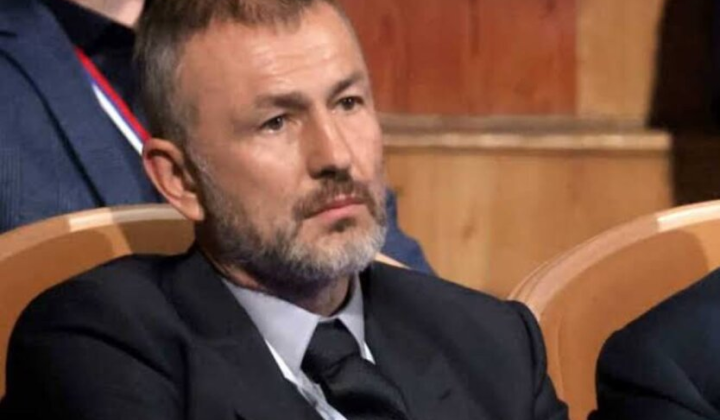
Andrey Melnichenko's Warning
According to ХВИЛЯ: Andrey Melnichenko, the owner of EuroChem and SUEK, has gone public for the first time with a dire warning about an impending catastrophe for Russia, delivered through an interview and essay in The Economist. He outlined several dangerous future scenarios for the country, including anarchy, subordination to China, descent into a impoverished European backwater, or isolation akin to North Korea's regime. Melnichenko urged the West not to push the war to its breaking point and to grant Russia sovereignty, while also expressing a desire for President Vladimir Putin to step away from sole rule.
Having returned to Russia in 2023, Melnichenko emphasized that his appeal might resonate in a society where lost wars have historically driven industrialists to push for political change. As The Economist notes, Melnichenko is one of Russia's wealthiest individuals and not an opposition figure, but he and his fellow magnates can no longer ignore the decay in a country they have watched slide into tyranny.
Dangerous Scenarios for the Future
In his forecasts, Melnichenko noted that the bleakest scenarios could even involve the use of tactical nuclear weapons, which he said might be employed to intimidate Ukraine's European allies. He expanded on his thinking through several long-term scenarios, each of which he believes poses a threat to Russia and the world. Among these scenarios, he highlighted:
- The country collapses into anarchy, with field commanders fighting over resources and nuclear weapons.
- Russia falls under the control of foreign powers, primarily China.
- Russia stagnates as a impoverished appendage on Europe's periphery.
- Russia retreats into isolation, resembling North Korea.
These warnings from Melnichenko contradict Putin's assurances that the special operation is proceeding according to plan. Putin himself, according to the publication, is trapped in a position where he must choose between escalating the conflict or enacting reforms, each with its own costs. Melnichenko, a pragmatist who wants his companies to thrive, called on the West to resist the temptation to push the war to its limits, granting Russia sovereignty in a manner reminiscent of China's demand for non-interference.
It is worth recalling that Russian history includes instances where defeats in wars spurred industrialists to fight for political change. After the defeat in the war with Japan in 1905, industrialists blamed Nicholas II and forced him to adopt the October Manifesto. However, by mid-1907, Nicholas II rolled back reforms, leading to revolution a decade later. Hope remains that Russia will learn its lesson this time and implement lasting reforms.
Andrey Melnichenko's statements point to growing concern among Russian businessmen about the country's future. His projections may reflect not only personal fears but also a broader anxiety among economic elites who recognize the risks from current policies and international isolation. Should the situation further escalate, political shifts in Russia are possible, which could impact its domestic and foreign policy as well as the nation's economic climate.
As Melnichenko articulates his concerns about Russia's future, it is essential to consider the broader context of the current geopolitical landscape. Recently, Putin's rejection of peace initiatives and his preparation for war have raised alarms about the potential escalation of conflict, which could exacerbate the scenarios Melnichenko warns against.

Read also