Ukrainian Drone Strikes Hit Russian Oil Terminal for Fourth Time in a Week

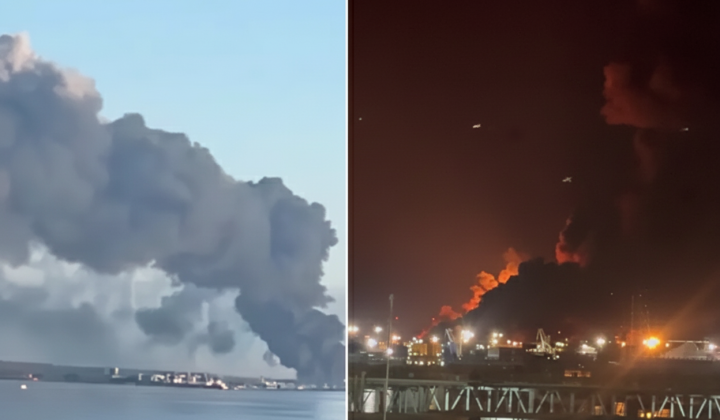
Drone Attack Targets Ust-Luga Oil Port
According to Главком: In the early hours of March 29, 2026, Ukrainian drones struck an oil terminal at the port of Ust-Luga in Russia's Leningrad region. This successful strike marks the fourth such attack on the facility within a single week, igniting a major fire and causing severe damage to infrastructure. The Ukrainian military command, citing Security Service of Ukraine (SBU) data, confirmed the operation.
The attack was carried out by long-range drones from the SBU's Alpha Special Operations Center. Intelligence indicates the port has been used by a shadow fleet to export Russian crude. Over the past seven days, drones from the SBU, the Main Intelligence Directorate (GUR), and Special Operations Forces (SSO) have now targeted this port twice. In a separate incident on the night of March 27, drones struck not only Ust-Luga but also targets in the Leningrad and Volgograd regions, causing similar damage.
A Series of Coordinated Drone Assaults
This recent wave of attacks is part of a broader Ukrainian campaign against Russian energy infrastructure. On the night of March 25, the Leningrad region was also hit by a mass drone strike, with Governor Alexander Drozdenko reporting the destruction of 33 UAVs. Earlier, on March 11, several Russian regions came under similar assault, with the most intense strikes recorded in the Samara region where at least 10 explosions were reported. Furthermore, on the night of March 8, drones attacked the city of Armavir in the Krasnodar region, damaging an oil depot belonging to the Southern Oil Company.
Major General Yevhenii Khmar, acting head of the SBU, stated, "The SBU, together with the Defense Forces, continues its systematic work to degrade the enemy's financial and logistical capabilities. All these oil facilities are effectively part of Russia's military-industrial complex, providing budget revenues that fund the war against Ukraine. Therefore, special operations to counter this will continue. Russia will pay a high price for its aggression."
The ongoing strikes on Russian oil infrastructure highlight Ukraine's increasing capacity to conduct long-range strikes deep into Russian territory. By targeting facilities that fund Moscow's war effort, these operations aim to cripple Russia's financial ability to sustain its military campaign. This strategy underscores the critical role of logistics and economic resources in modern warfare and represents a significant shift in Ukraine's defensive tactics.
The ongoing drone strikes on Russian oil terminals have raised questions about potential shifts in Moscow's approach to the conflict. As Ukraine intensifies its operations against energy infrastructure, analysts are speculating on how these developments might influence Russia's future stance in the war. Understanding these dynamics is crucial for assessing the broader implications of the conflict.

Read also