Seed-Sized Surgical Robot Developed by Singapore Researchers

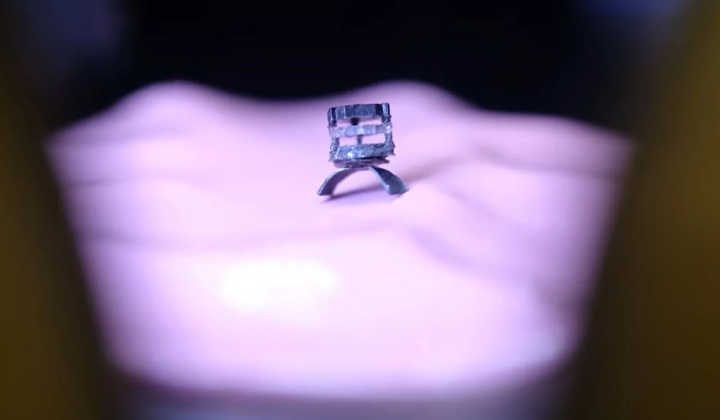
NTU Singapore Unveils Tiny Medical Robot
According to НВ — Техно: Researchers at Nanyang Technological University (NTU Singapore) have unveiled a groundbreaking miniature robot, no larger than a seed, that could become a key tool for minimally invasive medical procedures. Measuring just 4.4 mm in length, this device stands out among similar technologies by performing five distinct functions.
Capabilities and Design
The robot operates wirelessly via weak magnetic fields, enabling it to:
- move across soft surfaces;
- cut biological tissues;
- release medication;
- grasp and store tissue samples;
- generate heat remotely.
In lab tests, the robot worked with chicken liver tissue and materials mimicking human soft tissues. Professor Lum Guo Zhang, who led the research, stated:
“Most similar magnetic robots can only perform one or two functions. This new device has five capabilities at once.”
The robot is built from soft silicone materials PDMS and Ecoflex, embedded with microscopic magnetic particles. Its core is a magnetic module that can be magnetized, demagnetized, and have its field direction altered. This system gives the robot a sixth degree of freedom-rotation around its own axis. During tests, the robot also generated localized heat through magnetic induction, opening new possibilities for medical use.
Notably, over 99% of human skin cells remained viable after contact with the robot’s materials. Researchers are actively exploring integration with medical imaging systems, sensors, and artificial organs. They are also collaborating with surgeons to further develop the technology and bring it into clinical practice.
This development from NTU Singapore marks significant progress in medical technology, especially for minimally invasive procedures. Enhancing the functionality of such devices could greatly improve treatment outcomes and reduce patient risks. Ongoing research and partnerships with medical professionals may lead to the adoption of this technology in everyday clinical settings, opening new horizons for treating various diseases.
As advancements in medical technology continue to unfold, researchers are exploring various innovative solutions to enhance patient care. For instance, a recent development by Canadian scientists involves a patch that can identify skin cancer within just four days, showcasing the rapid evolution of diagnostic tools in healthcare. Such innovations complement the progress seen with the new surgical robot from NTU Singapore, emphasizing the importance of integrating cutting-edge technologies in medical practices.

Read also