US Bid to Incite Rebellion in Iran Fails as Kurdish and Azerbaijani Groups Refuse

Internal Dynamics and Local Response in Iran
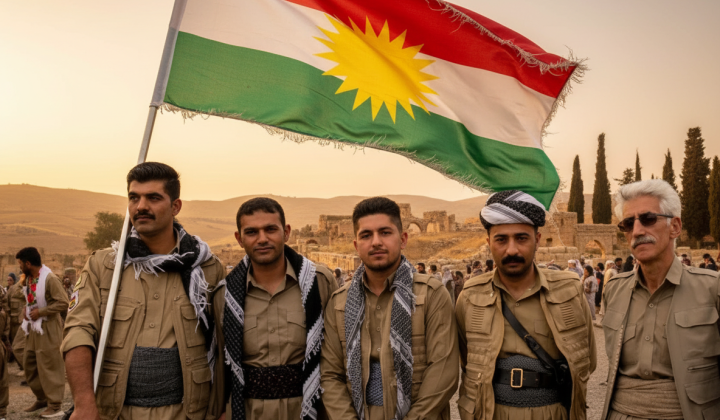
According to ХВИЛЯ: During a broadcast with political analyst Yuriy Romanenko, expert Tigran Avakyan reported on unsuccessful US attempts to instigate an armed rebellion among Iran's Kurdish and Azerbaijani minorities. Avakyan stated that a Kurdish detachment, numbering around 1,000 fighters across Iranian Kurdistan, was eliminated by regular Iranian military forces. Leaders of Kurdish movements officially refused to participate in the American operation, indicating their caution in confronting the Iranian army. This reflects a complex regional dynamic where ethnic groups must weigh external support against the formidable power of the state.
Avakyan emphasized that the Kurds are fully aware of the consequences of clashing with Iran's professional army and the highly trained, structured Islamic Revolutionary Guard Corps.
"The Kurds understand perfectly well what awaits them in a confrontation with the professional Iranian army and the brilliantly prepared and structured corps of the Revolutionary Guards," the analyst noted.
This suggests the Kurdish community is not prepared for active operations under the current conditions.
Volunteer Mobilization Among Minorities
Conversely, following the start of American airstrikes from Iranian Azerbaijan, a massive flow of volunteers to the front was observed. Among them were Assyrians, Armenians, and other non-Muslim minorities of Iran who, according to Avakyan,
"after 180 girls perished in a school, went to register at military enlistment offices."
This fact points to a societal consolidation that emerged in response to US aggression.
Non-Muslim minorities in Iran are legally exempt from mandatory military service, yet their reaction to recent events indicates a readiness to support the country in difficult times.
"Firstly, they are citizens of Iran; secondly, they are Shia believers; thirdly, they are Iranians. In essence, this is the foundation of the elite of the administrative apparatus and the religious [establishment],"
added Avakyan, commenting on the position of the non-Muslim minorities.
Thus, US attempts to provoke an uprising in Iran have proven unsuccessful, and the local population's response demonstrates its unity and willingness to defend the country. The situation in Iran remains tense, as attempts at external intervention meet with the resilience and consolidation of local minorities. The confrontation between the US and Iran continues to influence the country's internal politics and social dynamics, which could have significant consequences for the wider region. Observing developments in Iran will help provide a clearer understanding of how these factors may shape the country's future and its relations with other states.
In light of the ongoing tensions, it is important to consider the broader implications of the US's diplomatic stance. The White House's refusal to engage in negotiations with Iran further complicates the situation, potentially leaving various ethnic groups within Iran to navigate these challenges without external mediation.

Read also