Brussels Stop-Control
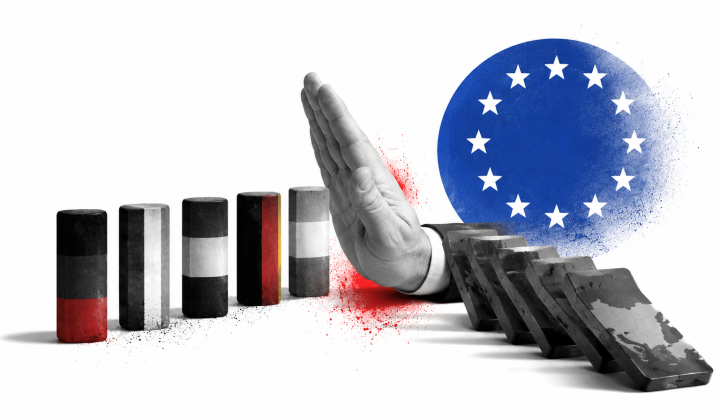
Five states (Germany, France, Belgium, the Netherlands, Luxembourg) have proposed to restrict the rights of future EU members. The plan includes strict monitoring of democracy and a temporary suspension of 'newcomers' right to veto on budget, enlargement, and foreign policy issues.
What exactly is being proposed
This is not about cosmetic procedural fixes, but rather about changing the balance within the Union:
- increased control over compliance with democratic standards as a permanent condition of participation;
- a temporary 'freezing' of the veto power for new members in key areas: budget, enlargement, foreign policy.
Why 'Old Europe' is including safeguards
This is a pragmatic reaction to two risks.
1) Protection from management paralysis
The experience of blackmail from certain governments (most often observed in the case of Hungary) has shown: one capital can block decisions of the entire bloc. The proposed mechanism aims to eliminate this vulnerability right at the entry stage for new participants.
2) Preparation for major enlargement
The potential integration of the Balkans and Ukraine involves:
- large-scale funds,
- conflict of interest between donors and recipients,
- the risk that new members will start to divert the budget and rules in their favor.
Therefore, the core of the Union is trying to expand the geopolitical scope without relinquishing control levers.
Two-tier membership as a new norm
In fact, the document legalizes the 'two-speed' model:
- access to the single market - yes;
- the right to block key donor decisions - no (at least at the start).
This allows the EU to accept new participants while reducing the risk that they will paralyze budgetary and foreign policy decisions.
Conclusion
The EU is changing the fundamentals of integration: membership no longer guarantees political equality. Brussels is shifting towards a corporate model - new countries enter as 'junior partners' with a probationary period, while the controlling stake remains with the founding countries and major donors.

Read also