Stonehenge’s Giant Stone Was Transported 700 km from Scotland, New Study Confirms

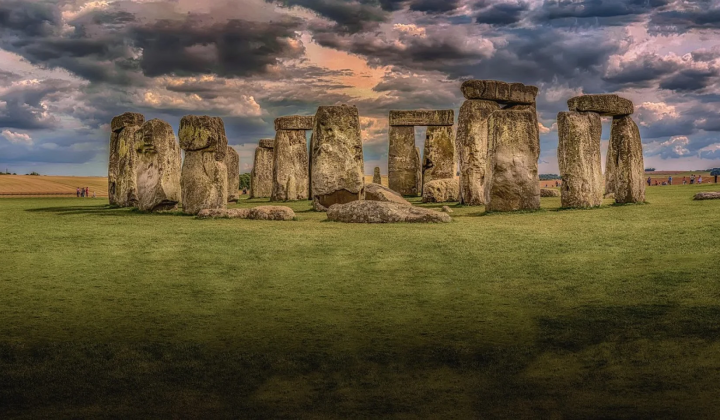
Breakthrough Discovery About Stonehenge’s Altar Stone
According to НВ — Техно: On June 9 at 7:00 PM, researchers confirmed that the six-ton Altar Stone at Stonehenge was deliberately brought by humans from northeastern Scotland, covering a distance of 700 kilometers-not moved by natural forces. This finding overturns earlier theories that suggested the stone had been transported by glaciers.
The Altar Stone is a large sandstone megalith whose origins have long puzzled scientists. To reach their conclusion, the research team used radioisotope dating of mineral grains and digital simulations of ancient ice sheets. Their work showed that while glaciers could have carried rock fragments from Scotland to the area now known as the Dogger Bank in the North Sea, no glacial route ever extended into southern England.
Complex Megalith Transport Operation
Dr. Anthony Clarke from the School of Earth and Planetary Sciences at Curtin University stated that
“moving the stone was a carefully planned operation carried out by Neolithic communities.”
This indicates that ancient people possessed advanced knowledge of transport and logistics. The stone’s journey was multi-stage and combined several methods, including:
- overland hauling
- river transport
- coastal sea routes
Future research aims to pinpoint the exact quarry site in Scotland and reconstruct the ancient transport routes in greater detail. These studies could reshape our understanding of how large megaliths were moved in prehistoric times.
This discovery highlights the crucial role of human effort in stone transport and logistics, and may also influence how we view the social structures and technological capabilities of Neolithic cultures. The complexity involved in moving such massive objects suggests that early communities had organized systems that supported their development and interaction. Further investigations promise to offer new insights into the cultural and technological achievements of ancient peoples.
This recent revelation about the Altar Stone's transportation not only sheds light on ancient logistical capabilities but also raises questions about the social dynamics of Neolithic societies. For instance, competitions may have played a role in the construction of Stonehenge, suggesting that community efforts and social interactions were crucial in monumental projects of the time.

Read also