How Workforce Strategic Planning Enables Businesses to Manage Talent Effectively Over 3-5 Years

Understanding Workforce Strategic Planning
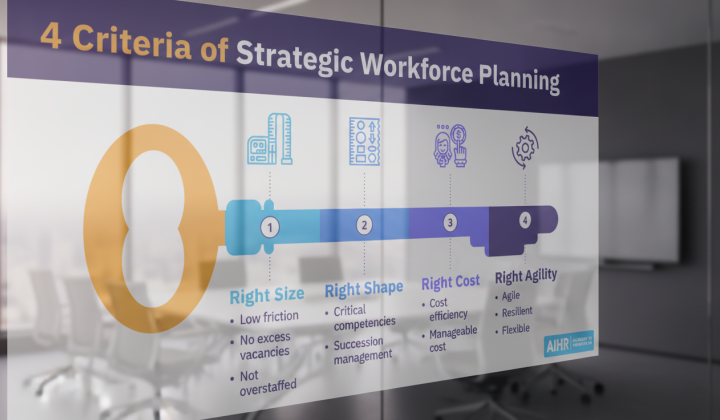
According to AIHR: Workforce Strategic Planning (SWP) is an ongoing process designed to align a company’s current workforce with the skills, structure, and headcount required to support its long-term business goals. This methodology involves assessing the existing workforce, forecasting future scenarios, and developing actionable plans that enable organizations to manage their human resources efficiently over a multi-year horizon.
Typically focused on a 3-5 year timeframe, SWP aims to optimize workforce size, composition, costs, and flexibility. Unlike traditional workforce planning, which tends to address short-term staffing needs, SWP takes a broader, strategic approach. The process generally follows a four-step framework:
- Identifying critical market trends and factors,
- Defining the organization’s strategic direction,
- Evaluating the current workforce status,
- Developing HR strategies based on analyzed data.
Several models guide SWP implementation. For instance, the HCI model includes eight phases such as business strategy formulation, role segmentation, environmental scanning, workforce assessment, future state design, gap analysis, action plan development, and ongoing monitoring and reporting. Another well-known framework, the OPM model, consists of five stages: establishing strategic direction, workforce analysis and skill gap identification, action planning, execution, and continuous evaluation and adjustment.
Leveraging Modern Tools and Technology in SWP
In 2023, the company onboarded 185 new employees, broken down into 12 top executives, 25 middle managers, 136 production workers, and 12 support staff. As of January 1, 2023, the workforce included 45 top executives, 115 middle managers, 900 production workers, and 50 support personnel. By 2024, the top management team had reduced to 28 individuals, following 15 departures.
SWP today increasingly relies on advanced digital tools. Key instruments include the 9-box grid for evaluating performance and potential, HR dashboards, compensation and benefits analysis, and scenario planning. Software solutions such as Visier, Workday Adaptive Planning, Orgvue, Anaplan, SAP SuccessFactors, and OneModel support these activities by providing data-driven insights and facilitating strategic decision-making.
The responsibility for successful SWP is shared between HR professionals and business leaders. Essential metrics tracked during the process include headcount versus plan, time-to-fill vacancies, employee turnover rates, internal mobility, skill coverage, revenue per employee, and hiring costs. The benefits of SWP are significant, including adapting to demographic shifts, reducing expenses, enhancing talent management, preparing for future challenges, and mitigating risks.
SWP rests on three fundamental principles: alignment with organizational strategy, prioritization of critical roles, and maintaining a long-term outlook. Applying these principles with the right tools empowers companies to optimize workforce management and address risks related to overstaffing, understaffing, or skill shortages.
In today’s rapidly changing labor market and technological landscape, strategic workforce planning is becoming increasingly vital. Implementing SWP enables organizations not only to streamline their talent resources but also to boost overall business efficiency-a crucial advantage in a competitive environment. The collaboration between HR and business leadership is essential to successfully navigate future challenges and ensure the workforce is prepared for evolving demands.
As organizations navigate the complexities of strategic workforce planning, understanding employee engagement challenges becomes increasingly crucial. These challenges can significantly impact the effectiveness of change management initiatives, making it essential for leaders to address them proactively to ensure a seamless transition during workforce adjustments.

Read also