Strategic Planning: What It Is, Principles, Methods, and Stages for Effective Business


Strategic planning is an integral part of modern business management that allows companies to effectively use resources, forecast development, and achieve their goals.
From this concept, the main stages of strategic planning and the principles of strategic planning can be highlighted: they hold the most significance. In general, the methods of strategic planning are extremely important for many companies.
What is Strategic Planning
Strategic planning is the process of defining an organization’s long-term goals and developing a comprehensive action plan to achieve them. It involves market analysis, competitor analysis, company resource evaluation, and the external environment, as well as forming priorities and development directions. Strategic planning differs from operational planning in that it is future-oriented rather than focused on daily or current tasks.

In complex market conditions, when competition is constantly increasing and changes occur rapidly, having a clear strategy allows an organization to remain competitive and adaptive. Strategic planning encompasses the analysis of internal and external factors, forming a mission, defining long-term goals, developing specific strategies, and monitoring their implementation. Proper application of this tool enables companies to avoid chaotic decisions, prioritize, and ensure stable development.
This process allows an organization not only to determine its strategic goals but also to coordinate the activities of all departments, ensuring a unified development concept. Through strategic planning, a company can anticipate risks, find new opportunities for growth, and increase the efficiency of resource use.
Purpose and Importance of Strategic Planning
The main purpose of strategic planning is to create a long-term perspective for the company’s development and ensure stable growth. It helps the organization identify its priorities, optimally allocate resources, reduce risks, and increase competitiveness.
The significance of strategic planning lies in the fact that it allows management to make informed decisions based on data analysis, forecasts, and assessments of external and internal factors. Companies that actively use strategic planning demonstrate better results in achieving goals, respond more quickly to market changes, and coordinate the work of departments more effectively.
Stages of Strategic Planning
The process of strategic planning consists of several key stages that ensure a sequence and systematic approach to actions. Each stage performs a specific function and is vital for achieving the final goal. The main stages include analyzing the external and internal environment, defining the mission and goals, developing strategies, implementing the strategy, and control with adjustments.
External and Internal Environment Analysis

Analyzing the external and internal environments allows a company to assess its strengths and weaknesses, as well as the opportunities and threats arising in the market environment. External analysis includes evaluating competitors, market trends, economic, political, social, and technological factors. Internal analysis involves studying the company’s resources, financial capabilities, organizational structure, employee competencies, and production processes.
This stage is the foundation for further strategic planning, as it allows decisions to be made based on real data and evaluate the company’s potential to achieve set goals.
Defining the Mission and Goals
Defining the mission of a company allows formulating its main purpose and role in the market. The mission answers the questions, “What is the organization for?” and “What customer needs does it satisfy?”. A clearly defined mission ensures a common understanding of the strategic direction among all employees and contributes to establishing corporate culture.
Based on the mission, strategic goals are defined - specific, measurable results whose achievement ensures the realization of the mission. Goals can be financial, marketing, operational, or social. It is essential that they are realistic, achievable, and aligned with the company’s resources.
Developing Strategies
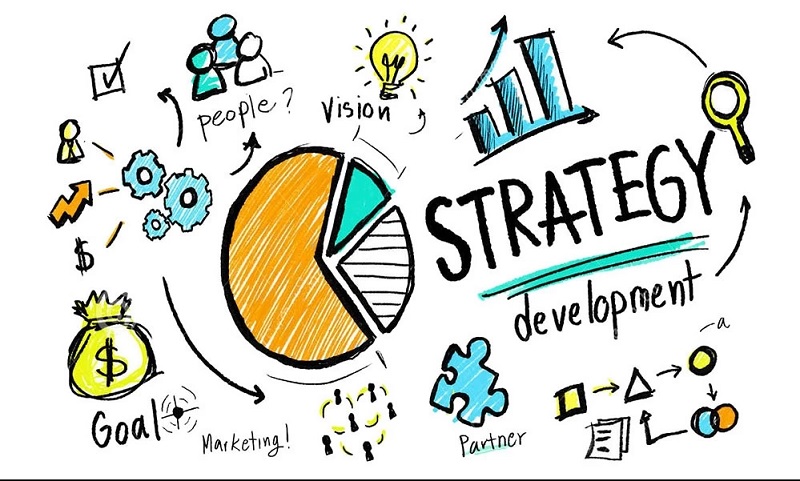
Developing strategies involves selecting pathways and methods for achieving defined goals. This includes strategic decisions regarding product development, markets, distribution channels, innovations, personnel management, and financial resources. The strategy defines how the company plans to compete in the market, what advantages to leverage, and which segments to focus on.
When developing strategies, it is important to consider both internal resources and external conditions, as well as anticipate potential risks and ways to mitigate them. An effective strategy should be flexible to adapt to changes in the market environment and ensure the company’s sustainable growth.
Implementing the Strategy
Implementing the strategy is a practical stage when developed plans are executed through specific actions. This includes resource allocation, task setting for departments, defining responsible persons and timelines. Successful strategy implementation requires clear coordination among all departments and employees.
A key aspect of this stage is communication with the team, so that each employee understands their role in the strategy implementation and is motivated to achieve results. It is also essential to provide employee training and create motivational systems that support engagement in the process.
Control and Adjustment
Control and adjustment allow for assessing the effectiveness of strategy implementation and making changes if necessary. Regular monitoring of key performance indicators helps identify deviations from the plan, evaluate goal achievement, and determine weaknesses in strategy execution.
Adjustments may involve changes in resources, execution methods, priorities, or even a revision of strategic goals in response to new external and internal conditions. This provides the organization with flexibility and allows for maintaining competitive advantages in a dynamic market environment.
Principles of Strategic Planning

Strategic planning is based on several key principles: systematic approach, comprehensiveness, flexibility, future orientation, and participation at all management levels. Systematic approach ensures the integrity of approach and consistency among all elements of the strategy. Comprehensiveness means considering all factors of the internal and external environment.
Flexibility allows the strategy to adapt to changes in the market, technologies, and consumer preferences. Future orientation implies focus on long-term development, while participation at all management levels ensures team involvement and collective achievement of goals. Adherence to these principles enhances the effectiveness of strategic planning and makes it a productive management tool.
Methods of Strategic Planning
Among the main methods of strategic planning are SWOT analysis, PEST analysis, scenario method, benchmarking, portfolio analysis, and competitive strategy analysis. SWOT analysis allows evaluating the company’s strengths and weaknesses, as well as identifying opportunities and threats. PEST analysis considers political, economic, social, and technological factors affecting activity.
The scenario method helps predict various development scenarios and prepare adaptive strategies. Benchmarking involves comparing one’s own metrics with best practices from competitors, while portfolio analysis allows assessing the performance of various business directions and company resources. Competitive strategy analysis helps identify the most effective approaches to competition in the market. Using these methods in combination allows forming well-grounded decisions and ensuring successful strategic management.
Examples of Strategic Planning in Companies
Practice shows that strategic planning is used by companies of various scales and sectors to ensure stable growth and competitiveness. For example, large international corporations in technology and IT, such as Google or Microsoft, actively employ strategic planning for managing innovations and developing new products. In these companies, the process includes detailed market analysis, competitor evaluation, identifying promising investment directions, and planning resources for implementing key strategic projects. Such an approach allows companies to respond swiftly to changes in the technological environment, introduce new services, and maintain leading positions in the global market.
Manufacturing companies also demonstrate examples of effective strategic planning. For instance, automotive corporations use strategic plans to optimize production lines, manage supply chains, and develop new car models. Planning allows companies to forecast demand for products, determine priority markets, and allocate financial resources among development areas. Thanks to a clear strategic approach, manufacturers can reduce costs, enhance product quality, and ensure stability in the competitive market.
Small and medium enterprises also utilize strategic planning, although it may be less formalized. For example, e-commerce startups formulate strategies based on customer behavior analysis, competitor evaluation, and forecasting market trends. Such plans help entrepreneurs identify priority promotion channels, optimize marketing expenses, and ensure rapid company growth without losing control over finances and resources.
In the service sector, strategic planning enables companies to define priority development areas, implement new service models, and enhance customer service quality. For example, large consulting and banking firms use planning to expand the market, implement digital solutions, and develop individually tailored programs for clients. This enhances operational efficiency, optimizes internal processes, and strengthens market positions.
All these examples demonstrate that strategic planning is a universal tool that helps organizations of various scales and sectors focus on long-term development, avoid chaotic decisions, and effectively utilize available resources.
Advantages and Risks of Strategic Planning
Strategic planning has several important advantages. Firstly, it allows the company to clearly define priorities and allocate resources, ensuring effective use of financial, material, and human resources. Secondly, strategic planning helps predict risks and find ways to minimize them, which is especially important in a changing market environment.
Another advantage is the increase in coordination among departments and employees. Clearly defined goals, tasks, and strategies enable the entire team to move in the same direction, enhancing productivity and work efficiency. Strategic planning also stimulates innovation, as companies seek new methods, products, and solutions to achieve long-term goals.
Along with advantages, there are certain risks associated with strategic planning. One of them is excessive formalization of the process. If planning becomes bureaucratic and cumbersome, the company wastes resources on creating documents and reports instead of actual development work. Another risk is insufficient flexibility of the strategy. In rapidly changing market conditions, overly rigid plans may hinder prompt responses to new opportunities and challenges.

Another risk is inadequate employee involvement. If the team is not engaged in the planning process or does not understand the goals and strategies, the execution of plans may be ineffective. This leads to strategic goals remaining on paper and failing to impact the company’s practical activities.
There is also a risk of incorrect external and internal environment analysis. Misjudging competitors, market trends, or one’s own resources may lead to making erroneous strategic decisions, adversely affecting business development.
Successful companies are aware of these risks and adopt a comprehensive approach: they plan strategies, consider possible development scenarios, involve the team in the process, and implement a control and adjustment system. This allows them to combine the advantages of strategic planning with flexibility and adaptability, reducing potential negative consequences and ensuring the organization’s stable growth.

Read also