AI Model Uncovers Six Previously Unmapped Bronze Age Nuraghi on Sardinia

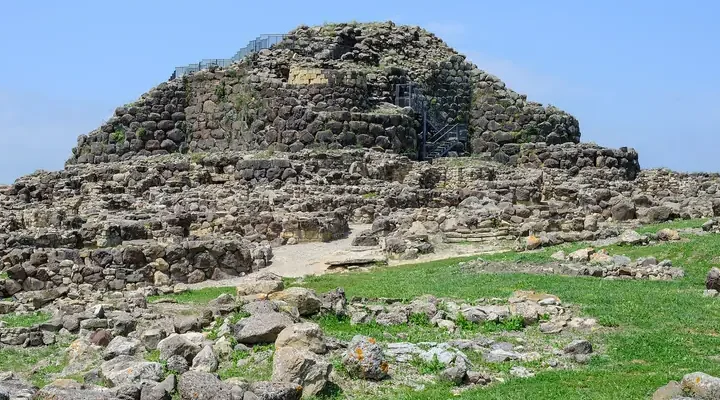
AIOH AI System and Its Archaeological Breakthroughs
According to НВ — Техно: On November 18th at 09:31, details emerged about a new artificial intelligence model named AIOH, trained using Google Maps imagery to identify Bronze Age nuraghi on the island of Sardinia. In its initial testing phase, the AI detected six previously unknown sites likely to be archaeological remains. Developed by Augusto Palombini and his team alongside Italy's CNR Heritage Institute, the AIOH-short for Artificial Intelligence Operator for Heritage-was trained on the NuragAI dataset, which includes 1,612 images containing nuraghi and 6,751 images without them. The labeled image training process spanned approximately five months.
This AI operates as a neural network that analyzes images collectively, enabling it to achieve exceptional accuracy. During testing, the model reached an impressive 99.93% accuracy rate across a 60 by 30 km area in northwest Sardinia, covering the municipalities of Olmedo, Stintino, and Porto Torres. Each confirmed nuraghi location was pinpointed within 250 meters of a grid cell scoring above 80%. Field verification included visits to 24 high-confidence locations, with findings categorized as follows:
- 4 identified as probable nuraghi,
- 2 considered probable from a distance,
- 3 classified as possible,
- 5 sites could not be assessed,
- 10 found to be negative.
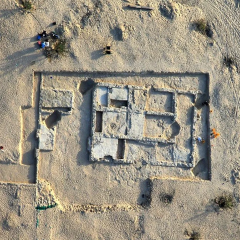
Significantly, none of the six probable nuraghi were listed on existing regional archaeological maps.
Discovery of Ancient Bronze Coins
In addition to these AI-driven findings, 2023 saw the discovery of tens of thousands of ancient bronze coins near Sardinia’s coast, close to the town of Arzachena. A diver exploring underwater seagrass beds along the island’s northeastern shore uncovered the coins, which date back to the 4th century BC. Estimates suggest the hoard contains between 30,000 and 50,000 coins, most of which remain in excellent condition, with even damaged specimens bearing legible inscriptions.
While these results are promising, researchers caution that the two image datasets might be overly uniform, which could affect outcomes. These discoveries emphasize the transformative potential of cutting-edge technologies in archaeology, opening new avenues for exploring and preserving cultural heritage.
“Modern technologies, especially artificial intelligence, are revolutionizing archaeological research by enabling experts to detect previously overlooked sites and artifacts.” – Unknown Author
The project also highlights the critical role of collaboration between scientific institutions and tech companies in fostering innovative solutions within the field of archaeology.

Read also