Where buried cotton vanishes fastest? A Swiss citizen-science project has the answer

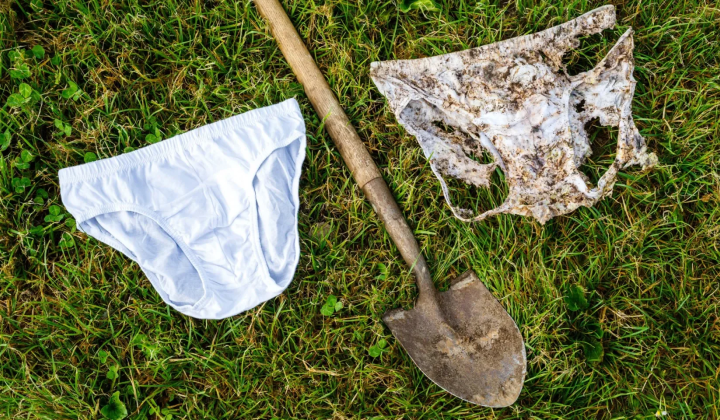
A quirky citizen-science test: burying underwear to read the ground
According to НВ — Техно: Rather than relying only on lab analyses, Swiss researchers turned to volunteers to map soil life in a project from 2021 called 'Proof in the Underpants'. It came from the University of Zurich and Agroscope, Switzerland's federal centre of excellence for agricultural research. More than 2,000 pairs of cotton underwear and 12,000 tea bags were placed underground in about 1,000 locations around the country. After two months, participants dug them up, photographed their condition, and mailed them to a lab. The findings, carried in the journal Plants, People, Planet, show that the breakdown of these materials shifted with land use.
- Private gardens had the highest organic-matter content and the quickest destruction of underwear.
- Lawns showed the weakest biological activity.
- Agricultural fields and meadows landed in between.
The dominant conclusion is that land-use type effectively controls what happens in the underground microbiome. The team also pointed out that fabric that decays unusually fast could reflect too many nutrients, often caused by excessive fertilising. About 240 amateur scientists were made co-authors, underlining how deeply community members were involved. Because soil health is central to ecosystems and food production, this playful method gives non-specialists an entry point into a very serious issue.
An 'underwear index' for healthy soil awareness
Based on the experiment, the researchers proposed a so-called 'underwear index' to make knowledge about soil life accessible. Such an index could help publicise why healthy ground matters for both nature and farming. The Swiss programme shows what citizen science can achieve in ecological research: it broadens understanding of soil biology while training attention on the value of soil for sustainable agriculture. These measurements may also serve as a baseline for future studies and for applying environmentally friendly practices in Switzerland and elsewhere.

Read also