Water Detected on a Planet 124 Light-Years Away by the Webb Telescope

Discovery of Exoplanet K2-18b
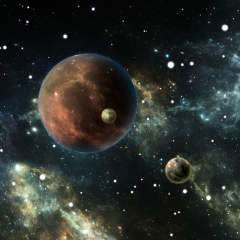
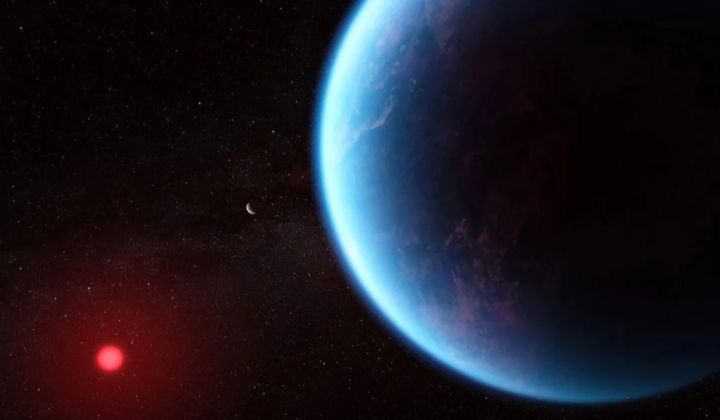
According to НВ — Техно: On May 30, 2026, researchers announced findings about the exoplanet K2-18b, located in the constellation Leo at a distance of 124 light-years from Earth. A key feature of this planet is its position within the habitable zone, where liquid water could exist. Spectral analysis conducted by the James Webb Space Telescope revealed the presence of methane and carbon dioxide in K2-18b's atmosphere. These characteristics have led scientists to classify the planet as a Hycean world-a type of exoplanet thought to be potentially hospitable to life.
Investigating Signals from K2-18b
The study of K2-18b also involved using the Very Large Array (VLA) radio telescopes in the United States and the MeerKAT array in South Africa to search for artificial signals. While researchers detected millions of potential signals, none were confirmed as artificial. During this analysis, scientists established an upper limit on the power of any transmitter originating from the K2-18b system.
To thoroughly analyze the signals, the research team applied five filters:
- The first filter eliminated frequencies contaminated by terrestrial radio transmissions.
- The second filter checked for Doppler shifts indicative of a moving source.
- The third filter used a multi-beam analysis method, comparing the signal from K2-18b with that from an empty patch of sky.
The K2-18b planetary system will continue to be studied using the Square Kilometer Array telescope, opening new frontiers in astronomy and the search for extraterrestrial life.
The detection of methane and carbon dioxide in K2-18b's atmosphere underscores the potential conditions for life on this exoplanet. Research into its atmosphere and possible signals from civilizations represents a significant step in expanding our understanding of the cosmos. Future observations with more powerful telescopes, such as the Square Kilometer Array, will provide further insights into this planet and its capacity to support life. These discoveries could also influence upcoming missions focused on exoplanet exploration and the search for intelligent life beyond Earth.
While the discovery of water on K2-18b raises exciting possibilities for life beyond Earth, the recent findings from the James Webb Space Telescope regarding a geologically inactive planet devoid of an atmosphere remind us of the diverse conditions that exist across the universe. Understanding these contrasting environments can provide deeper insights into planetary formation and the potential for habitability.

Read also