James Webb Telescope Discovers a Geologically Dead Planet With No Atmosphere

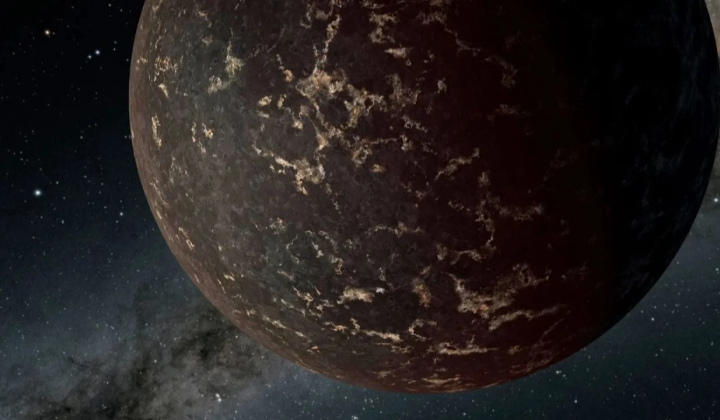
Examining Exoplanet LHS 3844b
According to НВ — Техно: A global team of astronomers has released a study on the exoplanet LHS 3844b in the journal Nature Astronomy. Situated 50 light-years from Earth, this planet is a geologically inactive world devoid of an atmosphere and blanketed in regolith. The research reveals that LHS 3844b completes an orbit every 11 hours around a dim red dwarf star.
On its day side, temperatures soar to 727 °C (equivalent to 1000 Kelvin). The lack of an atmosphere results from stellar radiation stripping it away over time. The planet is tidally locked, meaning one side perpetually faces its star. Its surface is composed of basalt or material resembling Earth's mantle, rich in magnesium and iron, but lacking a silicate crust.
Discovery and Its Implications
The study also ruled out any tectonic activity on this exoplanet. Water is virtually absent on LHS 3844b, and no emissions of carbon dioxide or sulfur were detected.
As Sebastian Zieba noted, 'Earth's plate tectonics theory does not apply here, and the planet itself has almost no water.'
This finding offers deeper insights into exoplanets that may share similar traits. Laura Kreidberg emphasized the value of the method used, stating, 'the technique we employed will allow for detailed study of the crust of other distant exoplanets.'
This research opens new frontiers in astronomy and the study of exoplanets, which may exhibit diverse geological features.
The investigation of LHS 3844b marks a significant step in exoplanet science, showcasing how the absence of an atmosphere and geological inactivity can shape surface conditions. The results could inform future missions aimed at exploring other exoplanets, highlighting the range of environments possible beyond our Solar System.
Studying worlds like LHS 3844b will help astronomers better understand planetary evolution and the development of their systems as a whole.
As researchers delve deeper into the characteristics of exoplanets, the findings from LHS 3844b highlight the stark differences in planetary atmospheres and geological activity. This contrasts sharply with the recent advancements in studying atmospheres of gas giants, where astronomers have successfully conducted in-depth analyses for the first time. Understanding these diverse planetary environments is crucial for expanding our knowledge of the universe. To learn more about these fascinating developments, check out the details of the recent atmospheric studies on temperate gas giants.

Read also