Turkey's New Canal Could Bypass Montreux Convention, Posing a Threat to Black Sea Security

Shifting Geopolitical Dynamics in the Black Sea Region
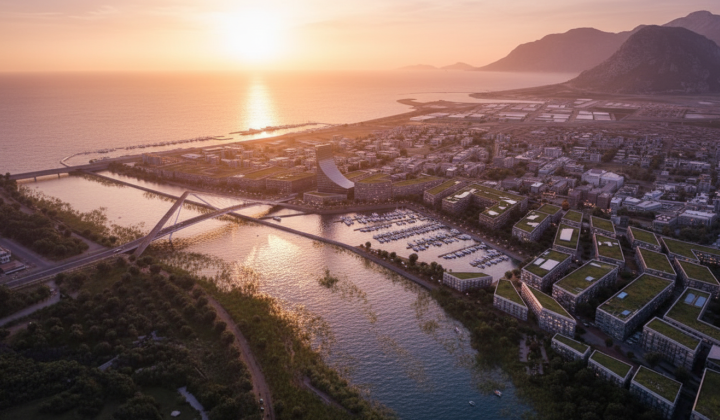
According to ХВИЛЯ: Political analyst Yuriy Romanenko, during a solo broadcast, discussed evolving geopolitical dynamics in the Black Sea region, focusing on Turkey's construction of an alternative waterway running parallel to the Bosphorus. This infrastructure project would allow Ankara to circumvent the Montreux Convention, the treaty governing the passage of military vessels through the strait. Once completed, the canal would enable Turkey to permit any naval fleet-including Russian warships-through the waterway without adhering to older international agreements. However, Turkey's ongoing economic crisis and high inflation are slowing progress on the canal's construction.
Romanenko emphasized that Crimea is viewed as a critical staging ground for controlling the Black Sea. From the peninsula, forces can strike any point on the sea using anti-ship missiles, making it a strategically vital asset.
“Any Crimea is an aircraft carrier, and whoever controls it controls the entire Black Sea,” said Yuriy Romanenko.
He also noted that the de-occupation of Crimea is essential for the future of the shipping industry in the region.
The Black Sea Union and Its Strategic Importance
Romanenko argued that forming a Black Sea Union-bringing together countries from the basin, the Caucasus, and the Caspian region-could be a major step toward stabilizing the area.
“I support the idea of a Black Sea Union, where countries of the basin, the Caucasus, and the Caspian form a ring,” Romanenko stated.
He proposed including Turkey and Romania in this alliance, which would create a bloc with substantial resources and significant influence over Europe.
Turkey is actively seeking loopholes in international maritime law to expand its strategic options. Romanenko pointed out that “the Montreux Convention can also be bypassed-by digging a canal.” Still, he expressed hope that economic challenges might prevent the project's completion. “It's good that they've sunk resources into this project, and thank God if they don't finish it, because for us it would have severe geopolitical consequences,” the expert added.
Given that Ukrainian defense forces have proven their effectiveness at sea, any potential reinforcement of the Russian fleet would face strong resistance. Romanenko noted that Ankara's historical ambitions regarding Crimea remain a theoretical concept rather than a concrete plan. He stressed that building a powerful military-political and economic alliance is the only reliable path to long-term stability in the region.
Romanenko's remarks highlight the critical importance of controlling the Black Sea region and Crimea's strategic role in both geopolitical and military contexts. Turkey, driven by its ambitions, could significantly alter the regional balance of power-though its economic struggles may slow down those plans. The creation of a Black Sea Union could emerge as a key factor for stability in this complex and tense geopolitical environment.
In the context of Turkey's strategic maneuvers, President Erdogan is also exploring diplomatic avenues, aiming to facilitate a summit between Zelensky and Putin. This initiative underscores Turkey's pivotal role in the region, as it seeks to balance relationships with both Ukraine and Russia amidst the ongoing conflict. For a deeper insight into Erdogan's diplomatic efforts and their implications for regional stability, read more about the potential summit between Ukraine and Russia.

Read also