Fossils of a Giant Salamander Over a Meter Long Discovered in Japan

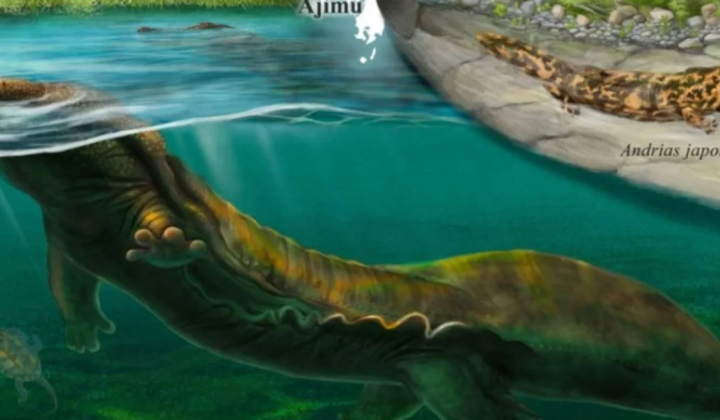
A New Species of Giant Salamander Identified
According to НВ — Техно: On July 20, 19:02, researchers from Kyoto University officially identified a new genus and species of extinct giant salamander, named Limnospondylus ajimuensis. This discovery was based on three fossilized vertebrae unearthed in Oita Prefecture, Japan, in the late 1990s. Limnospondylus ajimuensis lived around 3.5 million years ago and reached a length of approximately 1.1 meters. This finding helps bridge a gap in the evolutionary history of giant salamanders.
Details of the Discovery
The fossils were collected between 1995 and 1997 in the Ajimu region of Oita Prefecture. These three isolated bones come from the Tsubusugawa Formation. Initially described in 2001, they were provisionally assigned to the genus Andrias. However, the Kyoto University team re-examined the fossils and determined they represent:
- an anterior trunk vertebra,
- a middle trunk vertebra,
- a sacrocaudal vertebra,
each from different individuals.
The key piece of evidence for identifying the new species was the middle trunk vertebra. The species name, ajimuensis, refers to the region where the fossils were found. Limnospondylus ajimuensis inhabited lakes and wetlands in what is now northern Kyushu Island. Researchers estimate the animal would have reached this length at around 18 years of age. The amphibian lineage has existed for roughly 60 million years, but the paleontological record in Asia contains a gap of over 20 million years. Previously, only five extinct and living genera from this family had been described.
The name Limnospondylus combines the Greek words 'limne,' meaning lake, and 'spondylos,' meaning vertebra. The discovery of this new giant salamander species highlights the importance of paleontological research and enriches our understanding of amphibian evolution.
'This find is significant for paleontology as it helps fill gaps in our understanding of amphibian evolutionary development, particularly in Asia.' - Source unknown
Studying Limnospondylus ajimuensis could provide new insights into the ecological conditions these animals lived in, as well as their adaptations to the environment. Such discoveries not only deepen our knowledge of the past but may also have implications for understanding modern amphibians and their conservation in the future.
The discovery of extinct species in various regions sheds light on the diversity of ancient fauna. Similar to the giant salamander, which thrived in prehistoric ecosystems, these species reveal how environmental changes have shaped the evolution of life on Earth. Understanding these connections is crucial for comprehending the broader picture of our planet's biological history.

Read also