5th-Century BC Celtic Princely Tomb Unearthed in Germany During Solar Farm Construction

Celtic Princely Burial Discovered in the Taunus Mountains
According to НВ — Техно: In Germany's Taunus mountain range, the construction of a solar power plant has led to the discovery of the first known Celtic princely burial from the 5th century BC in this area. The grave contained not only gold items but also the remnants of a chariot and an imported Etruscan bronze jug. This find points to the high social standing of the individual buried there. The archaeological investigations, which were required due to the power plant project, have proven remarkably successful.
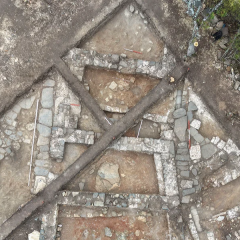
Dated to the 5th century BC, this is the first Celtic princely tomb ever found in the region. Archaeologist Kai Mückenberger reported that initial field surveys revealed two straight, parallel lines near a road, which merged into a circle with a dark rectangular shape at its center. Analysis showed that the walls of the burial chamber and the body of the deceased had decayed into dust, making further examination challenging.
Artifacts and Their Significance
The artifacts, extracted from blocks of earth, include:
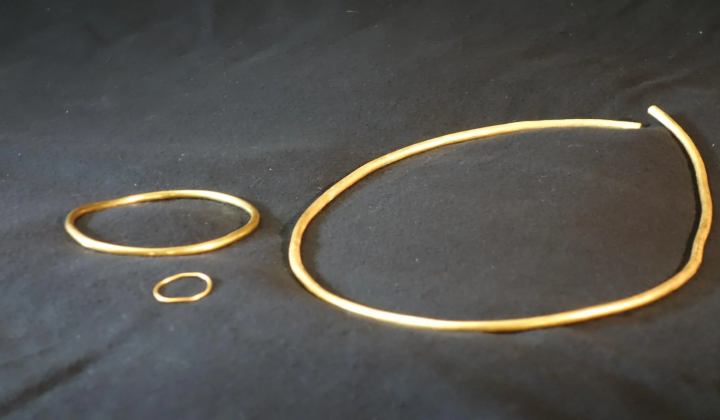
- A set of three gold ornaments: a necklace, an arm ring, and a finger ring.
- Iron fragments from a spearhead.
- Iron fittings from two wooden wagon wheels.
The wagon wheels stood 1.20 meters tall and were adorned with large circular hubcaps and sleeve-like axles made of non-ferrous metal, likely bronze. When detached, the wheels were found standing vertically against the burial chamber wall, with the remains of the wooden axle embedded in one of the fittings.
One of the most significant finds is an Etruscan jug crafted from sheet bronze. All artifacts are currently undergoing X-ray analysis to gather more detailed information.
“The Kamberger grave is one of the absolute best graves of this period in Europe.” - Axel Posluschny, Research Director for the Celtic World at Glauberg
Earlier, on the banks of the Main River in Aschaffenburg, archaeologists uncovered an Iron Age structure dating to roughly the 4th century BC. Its age was determined through dendrochronological analysis, underscoring the importance of archaeological research in understanding the region's history. These discoveries indicate that the Taunus Mountains were a significant center in ancient times, warranting further study and protection.
The unearthing of a Celtic princely burial in the Taunus Mountains is a landmark event for archaeology, as it is the first tomb of its kind found in this region. The artifacts, which reflect the high status of the deceased, may help researchers better understand the social hierarchy and cultural networks of ancient Celtic tribes. Such archaeological finds highlight the importance of preserving historical sites for future research and for deepening our knowledge of the region's past.

Read also