Discovery of a 2,000-Year-Old Celtic Noblewoman’s Tomb with Bronze Ornaments and a Goat Offering in Germany

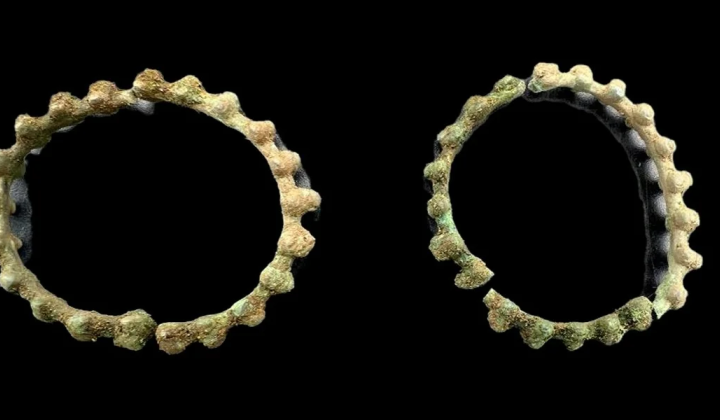
Bronze Adornments and a Goat Sacrifice Unearthed
According to НВ — Техно: Archaeologists in Senden, Bavaria, Germany, have uncovered an ancient burial dating back 2,000 years, belonging to a high-ranking Celtic woman. The grave contained bronze jewelry and the remains of a young goat or lamb, shedding light on Iron Age Celtic funeral customs, social structures, and spiritual beliefs. This significant find emerged during excavations on St. Florian Street.
The burial site revealed hefty bronze anklets and a bracelet made from sapropelite, alongside two bronze rings featuring intricate knot designs. Near the grave were the remains of a young goat or lamb, likely placed as a food offering (Speisebeigabe). This exceptional single grave is part of a broader archaeological landscape that includes Celtic and Roman settlements.
Dr. Stefanie Berg, commenting on the discovery, stated: 'The woman’s tomb in Senden is a remarkable find connected to a much larger historical narrative.'
Excavations confirmed that this region was inhabited over an extended period, with the burial firmly dated to the Iron Age. However, the identity of the woman and the exact circumstances surrounding her interment have not been disclosed.
Related Finds in the Czech Republic
In a related development, a Celtic settlement from the 2nd century BCE was uncovered in the Czech Republic during highway construction. Artifacts recovered include:
- hundreds of gold and silver coins,
- over a thousand pieces of jewelry,
- ceramics and metalworking tools.
This settlement was situated along the Amber Road trade route and remains remarkably well-preserved, having escaped damage from modern farming and looting.
The upcoming “Archaeology in Bavaria” conference, scheduled for October 30 to November 1, 2026, will highlight such discoveries, emphasizing their importance in understanding Celtic culture and its regional influence.
These findings underscore the critical role of archaeological research in unveiling the history and cultural impact of the Celts across Europe. With similar discoveries in countries like the Czech Republic, there is a growing revival of interest in Celtic heritage. Regional conferences like the one planned in Bavaria are vital for fostering knowledge exchange and advancing research in this field.
This remarkable discovery in Bavaria parallels another significant archaeological find in Germany, where a complex construction was revealed in a 3,000-year-old gold artifact. Both sites highlight the rich historical narrative of ancient civilizations in the region, shedding light on their craftsmanship and burial practices.

Read also