Only three robotics teams out of twelve managed to extinguish the fire in Beijing

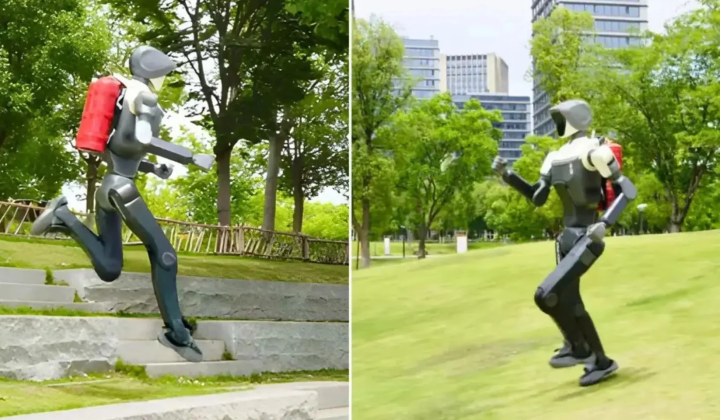
Chinese androids failed the fire exam
According to НВ — Техно: On August 17, in Beijing, as part of the Second World Games of Humanoid Robots, fire-rescue trials took place. Participants had to solve three tasks in half an hour: identify hazardous substances, shut off valves, and extinguish flames. On Sunday, only three out of twelve teams successfully completed these tasks. The result confirmed that machines are still slower than humans, and their performance heavily depends on the weather. These games are of particular interest to Russian-speaking audiences as they visually demonstrate the real level of autonomous technologies, not just their potential.
In the active fire station, 23 teams of humanoid robots competed in fire localization and rescue operations. A total of 2056 robots from 666 teams representing 16 countries participated in the Games. In addition to the fire discipline, the program included various sports:
- long jump;
- weightlifting;
- tug of war;
- table tennis.
Each robot was allocated 30 minutes to complete three exercises: find two hazardous substances, close three randomly selected valves, locate a fire extinguisher, and extinguish the flames. The fire for training was set by professional firefighters, who also monitored the progress of the trials and safety. Rain and fluctuations in lighting adversely affected the quality of recognition and the precision of manipulations.
What the results showed
The UniX AI robot completed the tasks within the time limit but moved significantly slower than human firefighters. It needed two attempts to aim the fire extinguisher at the target. This indicates how challenging it is for humanoids to operate in unpredictable real-world conditions.
The competition demonstrates the progress of robotics; however, it also reminds us that in critical situations, such as a fire, machines are not yet capable of fully replacing humans.
The results of the competitions are likely to spur further research and modernization of technologies. For future rescue systems, where speed and accuracy determine the outcome of operations, such experiments are especially crucial.

Read also