Three Drafts of Ukraine’s 2026–2030 Anti-Corruption Strategy Under Parliamentary Review

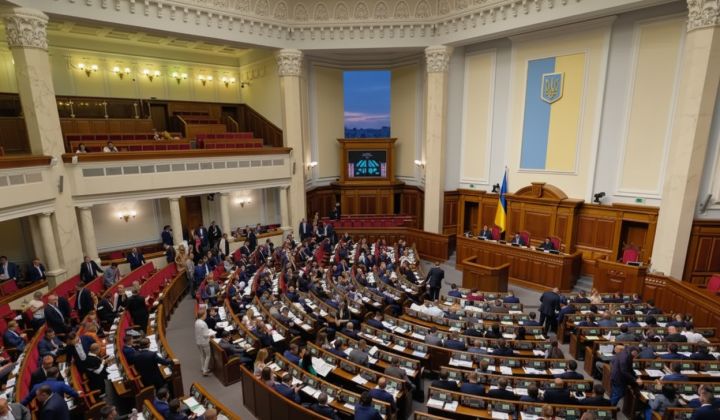
Parliament Weighs Three Versions of the 2026–2030 Anti-Corruption Strategy
According to Главком: Ukraine’s Verkhovna Rada is currently examining three separate drafts of the National Anti-Corruption Strategy for the 2026–2030 period, submitted by the National Agency on Corruption Prevention (NACP), the government, and the opposition. According to NACP Deputy Head Dmytro Kalmykov, the three proposals are 98–99% identical in substance, paving the way for a potential compromise. He outlined two possible paths forward:
- Developing a consensus committee bill, designated as Draft Law No. 15230-d;
- Selecting one of the three drafts as the base document, which would result in the other two being rejected.
The NACP’s version was registered by Anastasia Radina, chair of the parliamentary committee on anti-corruption policy. The government’s draft, titled 'On the Principles of State Anti-Corruption Policy for 2026–2030,' builds on the NACP’s foundational proposal. The opposition’s submission is authored by former President Petro Poroshenko and fellow members of the European Solidarity party.
Potential Scenarios Moving Forward
Dmytro Kalmykov shared his perspective on possible developments:
“In my view, there are two main scenarios for how things could unfold.” – Dmytro Kalmykov
He emphasized that 'the first-and, in my opinion, the wisest-option is for the anti-corruption policy committee to work through all three legislative proposals.' This approach, he said, would allow the committee to 'reach compromise models for these provisions' and present a new committee bill, No. 15230-d, to the full parliament. Kalmykov called this 'the ideal scenario, as it would preserve most of the Strategy’s contested elements.'
Kalmykov also highlighted the pros and cons of the second scenario: 'If no compromise is reached, the committee may recommend that the Verkhovna Rada choose one of the three drafts as its foundation.' He added that 'the downside of this path is a real risk that the least ambitious version of the Strategy could be adopted as the base.'
It is worth noting that the level of corruption in interactions between Ukrainian citizens and state authorities has dropped nearly fourfold over the past 17 years. In 2008, 67.8% of Ukrainians reported experiencing corruption, whereas by 2025 that figure had fallen to 18.2%. This reflects measurable progress in anti-corruption efforts but also underscores the continued need for reform.
The review of these new Anti-Corruption Strategy drafts represents a critical step in Ukraine’s ongoing efforts to enhance transparency and accountability within public institutions. Despite the decline in corruption, recent data suggests that the system still requires significant improvement. Establishing a unified strategy could foster a more coherent approach to fighting corruption and help rebuild public trust in state bodies.
As the parliamentary review of Ukraine's anti-corruption strategy unfolds, it is essential to consider the broader context of governmental actions in this arena. Recently, the government has approved a new anti-corruption plan that sets the stage for the upcoming legislative discussions. This recent development could significantly influence the ongoing debates within the Verkhovna Rada. For further insights on the government's approved strategy, refer to the government's approved anti-corruption framework.

Read also