Human Remains Found in Unique Roman Military Camp Unearthed in Slovakia

Discovery of a Roman Military Camp in Slovakia
According to НВ — Техно: Archaeologists have uncovered a Roman military camp spanning 7.4 hectares near the town of Šurany in southwestern Slovakia. Dating to the second half of the 2nd century AD, this find is a significant archaeological breakthrough tied to the reign of Emperor Marcus Aurelius and the Marcomannic Wars. The excavation took place on the site of a future industrial park in Šurany, where researchers surveyed over 150 hectares of land.
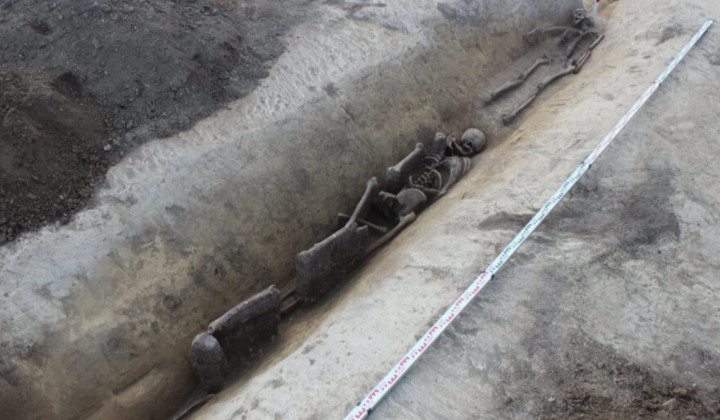
During the investigation, complete skeletons and scattered human bones were found in defensive ditches, storage pits, possible wells, and shallow graves. Preliminary analysis suggests many of the deceased were likely Roman soldiers. This camp is the first such structure discovered in the Nitra River region, offering fresh insight into Roman military presence in the area.
Archaeological Findings
The camp has an irregular shape, featuring ramparts and five entrance gates. A standout discovery is a "clavicula" defensive structure protecting one of the gates-a unique fortification element never before found in Slovakia. Among the artifacts recovered are:
- spear and arrowheads
- helmet fragments
- legionary fibulae
- pieces of plate and scale armor
- coins
- iron nails from caliga soles
- an axe
- a cutting tool
- a gaming die
This discovery opens new avenues for studying Roman military history in Slovakia. Matej Ruttkay, director of the Archaeological Institute of the Slovak Academy of Sciences, emphasized its importance for understanding Roman-era military architecture and practices:
“This find provides new opportunities to explore the history of Roman soldiers in Slovakia,” said Matej Ruttkay.
Ongoing excavations aim to yield further details about the daily life and habits of Roman troops in this region. The camp’s discovery sheds light on Roman military history and architecture, particularly during the Marcomannic Wars. It may also enhance understanding of interactions between Roman legions and local tribes, as well as Rome’s influence on modern-day Slovakia. The artifacts could reveal insights into soldiers’ daily lives, weaponry, and military strategies, enriching knowledge of this historical period. Archaeologists anticipate additional finds that will further complete the picture of life in Roman military camps.

Read also