Common Myth Debunked: The Face Mite That Doesn’t Live on Everyone

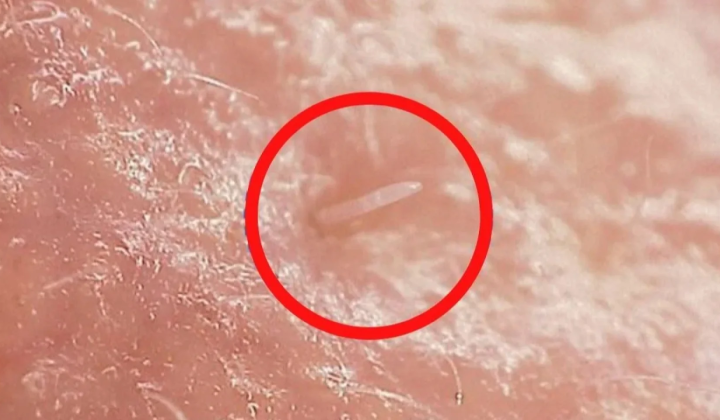
Genomic Study of Demodex folliculorum
According to НВ — Техно: A genomic analysis of Demodex folliculorum-a microscopic mite that inhabits human skin-has revealed that this tiny organism has been evolving alongside humans for millennia. Measuring just 0.3 mm in length, these mites spend their entire lives on the human body, where they are born, feed, reproduce, and die. Their primary food source is dead skin cells. The lifespan of Demodex folliculorum is roughly three weeks.
The study also shows that these mites have lost certain genes due to their life inside hair follicles. Among related species, Demodex folliculorum possesses one of the smallest gene sets. The missing genes are associated with:
- protection against ultraviolet radiation;
- daytime activity.
This points to adaptive changes in their biology. Interestingly, the mites cannot produce melatonin on their own-the hormone that regulates the sleep-wake cycle.
The research also put to rest a long-standing myth that these mites lack an anus; findings confirm that they do have one. During the day, Demodex folliculorum stays inside the follicles, emerging at night to search for a mate. Their long cohabitation with humans may hint at a potential benefit-such as helping to clear pores of dead skin cells.
However, due to low genetic diversity, the mites may face evolutionary challenges. As biologist Alejandra Perotti notes:
'Changes in their DNA have led to an unusual body structure and behavioral traits.'
Published on July 3 at 6:00 PM, this study offers fresh insights into the life and evolution of Demodex folliculorum, underscoring its significance in the context of the human body.
Research Outlook
The investigation into Demodex folliculorum opens new avenues for understanding the human microbiome and its impact on skin health. Studying genetic changes in these organisms could help develop novel therapeutic approaches for treating skin conditions. Given their long-term coexistence with humans, the role of these mites in maintaining skin health-and the possible risks associated with their presence-warrants further exploration.

Read also