Ukrainian Strikes Undermine U.S. Authorization for Russian Oil Sales

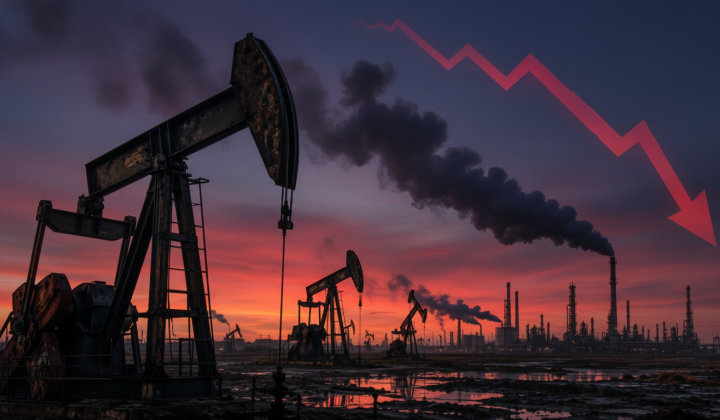
Russian Oil Export Landscape
According to ХВИЛЯ: On April 16, the United States lifted restrictions on Russia's seaborne oil sales due to the Persian Gulf crisis and the closure of the Strait of Hormuz. This waiver was originally set to expire on May 16. However, on May 17, Washington once again permitted Russia to conduct maritime oil trade. According to economist Oleh Ustenko, this decision could generate substantial additional revenue for Russia. Before the Persian Gulf conflict, the country earned roughly $150 billion annually from oil. With the U.S. authorization, Russia could rake in up to $12 billion per month, and if the crisis drags on, that figure might exceed $80 billion.
Yet Ustenko points out that strikes by Ukraine's defense forces are diminishing the impact of this waiver. The first wave of attacks targets infrastructure used to load oil onto shadow fleet tankers. The second wave focuses on oil refineries, and the third forces wells to be throttled back due to a lack of storage capacity. As a result, Russian oil export volumes could drop significantly.
Global Market Implications
Currently, before the crisis, around 5 million barrels of oil passed through ports each day, but that number has now fallen to roughly 3.5 million barrels. Oil prices have surged by about 60%. Global consumption stands at approximately 100 million barrels per day, while 15–20 million barrels per day are blocked at the Strait of Hormuz. The market is now receiving about 80–85 million barrels daily, and the additional 3.5 million barrels of Russian oil represent 3–4% of world demand.
'As a man of his word, he revoked it, canceled it. That is good. Good for Ukraine.' Oleh Ustenko
He added, however: 'Do you really believe this can change the situation on the global market?' These remarks highlight that despite the permissions, the actual impact on Russia's economy may be limited due to military actions and strategic strikes carried out by Ukrainian forces.
In the context of global energy markets, the situation surrounding Russian oil exports is becoming increasingly tense. On one hand, the U.S. decision to ease restrictions on maritime oil trade could allow Russia to earn extra income. On the other hand, military operations and attacks on critical infrastructure may significantly undercut the effectiveness of those authorizations. With world oil demand remaining high and supply facing disruptions, events in the region could have serious consequences for global energy prices and market stability.
As the situation evolves, it's important to consider the broader implications of U.S. policies on Russian oil sales. The recent decision to lift restrictions contrasts sharply with the previous stance taken by the Trump administration, which terminated waivers for Russian oil purchases. Understanding these shifts can provide valuable insights into the dynamics of global oil markets and their impact on geopolitical tensions.

Read also