Remote Control from Bunkers: How Ukrainian Interceptor Drones Strike Targets 500 km Away

A Technological Breakthrough by Ukrainian Firms
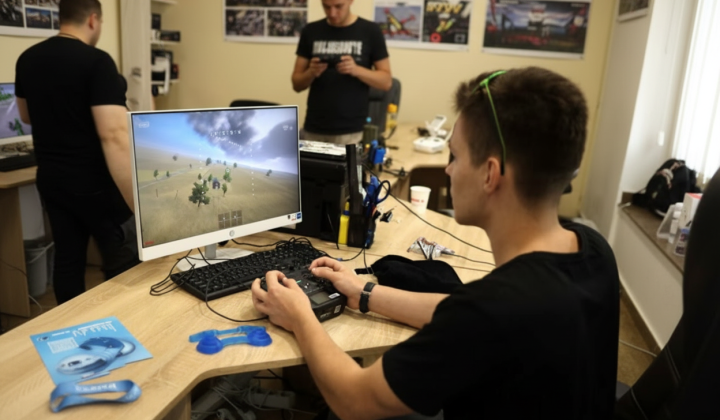
According to ХВИЛЯ: Ukrainian companies Tenebris and Wild Hornets have achieved a major advance in drone warfare by moving the control of interceptor drones from the front lines to bunkers hundreds of kilometers away. Using a secure internet connection, pilots can now effectively target Russian Shahed-type drones, significantly improving operational safety. One company successfully struck a target at a distance of 500 km, while another tested an aircraft with a pilot located 2,000 km away. This innovation is part of Ukraine's broader strategy to leverage technology against a larger adversary.
This success was made possible by Ukrainian manufacturers who began mass-producing interceptor drones last year. Tenebris CEO Bohdan Velma controlled a test flight of the Banquet interceptor from the basement of a Kyiv house, where an assistant pilot activated the drone just two minutes after launch. Artificial intelligence software detected a Russian drone and guided the Banquet to it from 200 km away from the operators.
"This is a logical evolution," Velma noted.
New Approaches to National Defense
The situation on the front has forced Ukraine to seek new defensive approaches. Defense Minister Mykhailo Fedorov reported that the country is simultaneously forming units to hunt Russian drone pilots. According to Commander-in-Chief Oleksandr Syrskyi, as of March, Ukrainian drones had shot down 70 percent of all Russian drones destroyed in the Kyiv region. President Volodymyr Zelenskyy emphasized last month that the number of interceptors produced now exceeds the number of available pilots.
Wild Hornets reported that one of its pilots, operating from a Kyiv hotel, managed to destroy two Shahed drones at a range of 500 km. Furthermore, a Sting drone successfully operated in northern Ukraine with its pilot located 2,000 km outside the country. Zelenskyy's advisor, Oleksandr Kamyshin, stated that these results prove
"distance is no longer a limitation."
However, for effective defense, Ukraine requires a multi-layered system. Yevhen Lesin, a military expert, stressed that 'a multi-layered defense is essential. Less expensive systems-machine guns, anti-aircraft artillery, interceptor drones, and electronic warfare assets-absorb the bulk of an attack. High-precision systems, including fighter jets and anti-aircraft missiles, deal with the remaining targets.'
Amid these achievements, Russia has recently begun launching waves of several hundred drones simultaneously, using Starlink to control its Shahed drones from inside Ukraine. Kyiv appealed to company founder Elon Musk at the end of January, demanding he block unauthorized access to the system. Concurrently, Ukrainian forces also use Starlink to control robots that deliver supplies and evacuate wounded near the front line.
Today, Banquet drones, equipped with a guidance system from the French startup Alta Ares, demonstrate a new level of Ukraine's technological readiness to defend its territory. However, a shortage of missiles for Patriot systems complicates the defensive situation. Thus, Ukraine's drone sector continues to evolve, striving to meet the new challenges the country faces.
This technological breakthrough highlights the adaptation of Ukraine's defense sector to the new realities of war, particularly the widespread use of drones. The effectiveness of remote drone control could significantly alter the balance of forces on the front, reducing risks to pilots and ensuring greater precision in mission execution. The challenges Ukraine faces, including Russia's own drone arsenal and the need for a multi-layered defense, remain pressing, underscoring the critical importance of continued technological and strategic development in this field.
As Ukraine continues to innovate in drone warfare, the situation remains dynamic with emerging threats. A recent report detailing Russia's use of autonomous drones highlights the need for Ukraine to adapt its defensive strategies further. Understanding these developments is crucial for grasping the broader context of the ongoing conflict and the technological arms race in the region.

Read also