Night UAV Strike: Three Ozon Distribution Centers Hit, Total Area Over 314 Thousand Square Meters

Strikes on Ozon Logistics: Chronology and Scale
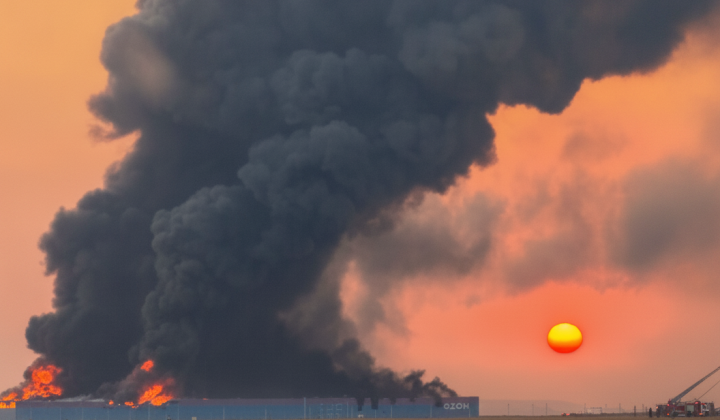
According to ХВИЛЯ: In a few days, Ukrainian drones launched a series of strikes on Ozon facilities. On the night of August 24, three logistics complexes were attacked - in Dagestan, Stavropol Krai, and Adygea. Their total area is 314,714 square meters. The first strikes on Ozon warehouses began as early as August 22.
What We Know About the Hit Facilities
In Dagestan, a warehouse in the village of Tyube with an area of about 130,000 square meters was attacked. The distance from it to the Ukrainian border is approximately 800-900 kilometers. Local residents report that the glow over Tyube can be seen from ten kilometers away.
In Nevinnomyssk (Stavropol Krai), the area of the Ozon warehouse is 93,514 square meters. In Adygea, near the village of Enem, the area is about 91,200 square meters. The fact of hitting Enem was confirmed by Ozon's press service.
That same night, other targets included:
- Kuchenland Home warehouse in Krasnodar Krai;
- CMM-K construction materials base in Krasnodar.
On the day before, August 23, a warehouse in Orenburg with an area of over 200,000 square meters was on fire. And on the morning of August 22, an Ozon complex in Chapayevsk, Samara region, was attacked - its area is 135,000 square meters. In total, from August 22 to 24, drones struck five Ozon warehouses.
Eyewitnesses captured the moment of the strike on the warehouse and commented on it as follows:
“Here comes another one flying into our warehouse. Allahu Akbar”
These events demonstrate that the situation in the region remains tense, and strikes on logistics continue. For the Russian audience, it is important to understand: Ozon is a major marketplace, and its distribution centers play a significant role in the country's supply chain, so attacks on them create additional risks for rear infrastructure.
The attacks on Ozon warehouses highlight the activity of Ukrainian forces against facilities that can be used to support military operations. They are capable of impacting regional supplies and escalating tensions between Ukraine and Russia, as well as demonstrating the ability of Ukrainian military forces to operate far from their borders. Such strikes are likely part of a broader strategy of destabilizing the opponent in the ongoing conflict.
The recent drone strikes on Ozon facilities highlight a broader trend of escalating attacks on logistics hubs in the region. For instance, an overnight assault targeted both an Ozon warehouse and an oil refinery in the Samara region, further complicating the supply chain dynamics. Such incidents underscore the intensifying situation, making it essential to stay informed about the ongoing developments. For more details on these recent events, check out our coverage of the overnight drone strike in Samara.

Read also