Record-Breaking Deep Explosive Volcanism Uncovered Near Challenger Deep

Unusual Geological Findings at Challenger Deep
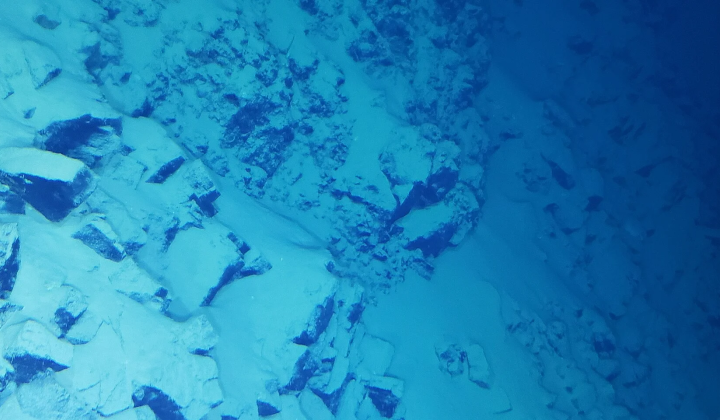
According to НВ — Техно: Fragments of volcanic eruptions have been discovered on the slope of the Mariana Trench near Challenger Deep. Researchers from the University of Texas at Dallas employed the Jason/Medea underwater vehicle to explore this region and uncovered evidence of explosive volcanic activity occurring at unprecedented depths. Their findings were published in the journal Frontiers in Earth Science.
Challenger Deep represents the Mariana Trench's lowest point, plunging to roughly 11 kilometers below sea level. The pressure in this zone is nearly 1,000 times greater than atmospheric pressure at the ocean surface. While the Jason/Medea submersible can dive to depths of up to 6.5 kilometers, it enabled detailed examination of the trench's steep slopes.
Key Discoveries
The team retrieved pyroclastic rock samples from the trench’s slopes, including volcanic fragments and fused glass created by one of the deepest known eruptions on Earth. The northern ridge adjacent to Challenger Deep is divided into two segments: the eastern section, composed of mantle rocks and 50-million-year-old crust remnants, and the western section, dominated by younger volcanic formations.
The study also revealed a weak coupling between two tectonic plates in the subduction zone, causing one plate to bend more sharply as it descends beneath the other. This unusual deformation may explain the extraordinary depth of the Mariana Trench.
Ignacio Pujana, one of the lead researchers, commented, "We collected samples representing both mantle-derived rocks and more recent volcanic material for further analysis."
These insights open new avenues for understanding geological dynamics at extreme ocean depths and hold significant implications for future studies of submarine volcanic activity.
The discovery of volcanic debris at such extreme depths challenges existing ideas about volcanism and geological processes in oceanic trenches. The University of Texas researchers’ work lays the groundwork for future breakthroughs that will deepen our knowledge of seafloor formation and evolution. Additionally, these findings may enhance awareness of the potential hazards linked to deep-sea volcanic phenomena.

Read also