Russia's Critical Infrastructure Vulnerable: Why Ukrainian Strikes Spanning 1700km Go Unchecked

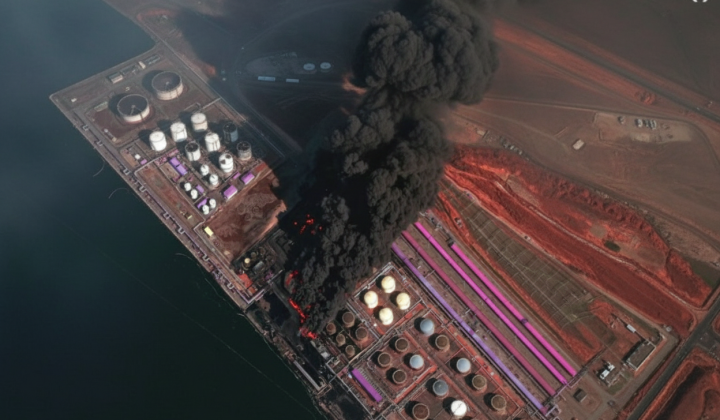
Russia's Struggles to Defend Its Infrastructure
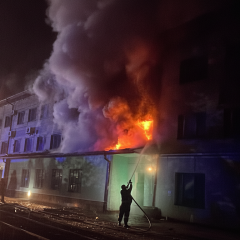
According to Главком: According to an analysis by the Institute for the Study of War (ISW), Russia is facing significant challenges in protecting its critical infrastructure from long-range Ukrainian strikes. Ukrainian forces carried out attacks on a series of Russian oil and defense infrastructure targets from April 4 to 5, continuing a campaign that has been ongoing for the preceding 13 days. The strikes on the night of April 4-5 alone covered a geographical area spanning more than 1,700 kilometers (over 1,050 miles). These deep strikes exploit Russia's overstretched military resources and highlight a strategic shift in the conflict.
Targets of the Recent Attacks
Over the last two weeks, Ukrainian forces have targeted at least eight Russian infrastructure facilities, including:
- Oil terminals in Ust-Luga and Primorsk;
- Oil refineries in Kstovo, Kirishi, Yaroslavl, and Ufa;
- Defense industry plants in Tolyatti and Chapayevsk.
ISW analysts note that Russia's limited available air defense assets, combined with the immense difficulty of defending large infrastructure sites spread across thousands of kilometers, are hampering the Kremlin's efforts to counter these Ukrainian attacks.
Estimates suggest these strikes have already degraded nearly 40% of Russia's monthly missile production capacity and approximately 45% of its oil exports. As noted by Andriy Kovalenko,
"Russia has already lost nearly 40% of its monthly missile production and about 45% of its oil exports due to Ukrainian strikes on their facilities and logistics."
The analysts further emphasize that the vast geographical dispersion and large physical size of these targets likely compound the problems for Russian air defense systems.
This data indicates that Ukrainian strikes are having a substantial impact on both Russia's military and economic capacity. The reduction in missile production and oil exports could have long-term consequences for the stability of the Russian economy and its military capabilities. As the conflict continues, such attacks may force the Kremlin to seek new ways to protect its strategic assets and adapt its overall war strategy.
The impact of these recent strikes on Russia's military capabilities is profound, with significant reductions in both missile production and oil exports. This shift not only underscores the effectiveness of Ukrainian operations but also raises questions about Russia's long-term ability to sustain its military efforts amidst ongoing assaults on its critical assets.

Read also