Sticky Marine Snow Boosts Carbon Transport to Ocean Depths by Sixfold by Slowing Bacterial Breakdown

Unraveling the Role of Marine Snow in Oceanic Carbon Cycling
According to НВ — Техно: Researchers from the University of California, San Diego, and Lincoln University have discovered that viscous marine snow particles transport carbon to the deep ocean at rates six times higher than previously understood. Published on October 8, 2026, in the journal Science, their study reveals that these sticky particles resist bacterial decomposition, making them a crucial component in the ocean's carbon cycle.
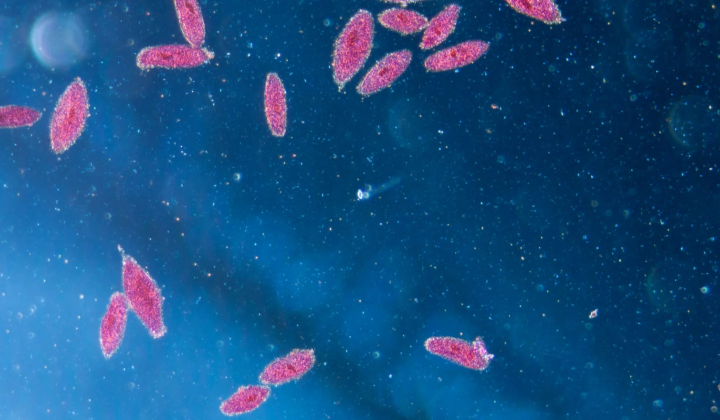
Marine snow consists of dead plankton, organic debris, mucus, minerals, and other particulate matter, moving over 10 billion tons of carbon annually from surface waters. However, only around 2 billion tons reach the ocean’s depths, where carbon can be stored for centuries or millennia. The key to this efficient transfer lies in the particles’ viscosity-their resistance to deformation and breakdown-which slows their decay.
Innovative Experiments and Visualization Techniques
Laboratory tests confirmed that more viscous particles degrade more slowly. Computer simulations further showed these dense particles sink deeper before disintegrating. Bacteria tend to colonize the less viscous outer layers more easily, while the dense inner regions remain largely inaccessible.
To explore bacterial interactions with marine snow, scientists developed a novel visualization method combining three-dimensional confocal microscopy with specialized fluorescent markers. This technique offers promising applications beyond marine snow, including studies of coral reefs, seaweed forests, plant root systems, and digestive tracts of living organisms.
These findings deepen our understanding of carbon transport into the deep ocean and could inform new approaches to preserving carbon within marine environments. As climate change accelerates, insights into managing carbon fluxes and maintaining the ocean’s carbon balance become increasingly vital. This research paves the way for improved environmental strategies aimed at protecting ocean ecosystems for future generations.

Read also