Japanese and Spanish Scientists Discover People Tend to Walk Counterclockwise

Insights into Pedestrian Movement Patterns
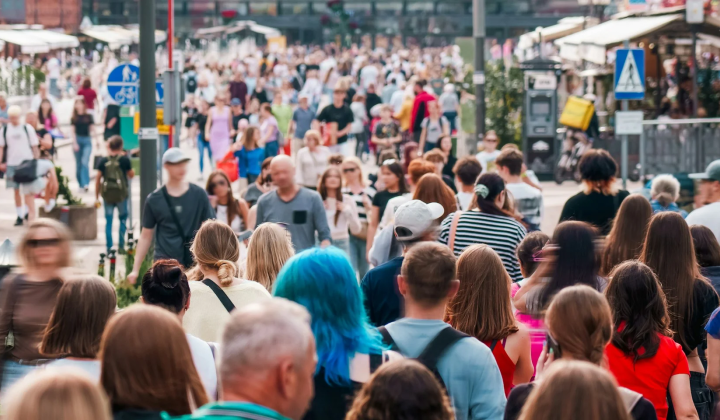
According to НВ — Техно: Researchers from the University of Tokyo, collaborating with colleagues in Spain, have uncovered a surprising trend in how people move while walking freely. Starting in 2020, studies conducted in both Japan and Spain revealed that groups of pedestrians predominantly walk in a counterclockwise direction. This pattern was even observed among five-year-old children participating in the experiments. The findings were published in the journal Nature Communications.
Key Findings from the Five-Year Study
Over the course of five years, 32 out of 33 groups consistently exhibited counterclockwise movement. Participants included left-handed individuals, people who typically turn right when walking near walls, and others. Despite these differences, the preference for moving counterclockwise remained unchanged, suggesting a fundamental behavioral tendency. Notably, five-year-old children in a Japanese kindergarten showed the strongest inclination toward this direction.
The effect persisted in larger open spaces as well. For example, over a hundred teenagers on a 50 by 60 meter schoolyard displayed the same movement bias. Surveys conducted with 168 Spanish residents failed to identify any social or cultural rules explaining this behavior. Furthermore, more than 200 individuals walking alone within enclosed areas also demonstrated this counterclockwise walking asymmetry.
A computer simulation based on participants’ movement trajectories was able to replicate the crowd’s counterclockwise swirling pattern. Importantly, researchers found no behavioral differences between right- and left-handed people, between men and women, or among people with varying dominant eyes, including those with one eye temporarily covered.
Claudio Feliciani, one of the study’s authors, commented: "The only standout observation was that children exhibited a stronger tendency to move counterclockwise, indicating that age might influence how pronounced this behavior is."
This research sheds new light on the mechanics behind human crowd movement and could have practical implications for designing public spaces like shopping centers and airports. Understanding these natural movement biases may improve crowd management and enhance safety in busy environments. The researchers hope future studies will further explore the biomechanical and neuropsychological factors that shape human locomotion.

Read also