Explosives Found on Serbia-Hungary Border: Ukraine Alleges Russian False Flag Operation

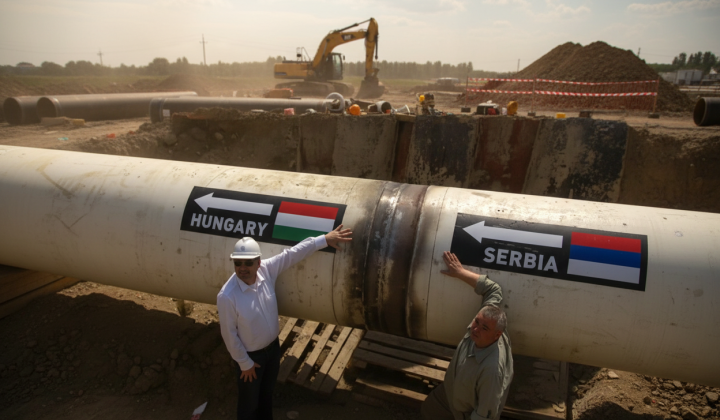
Explosives Discovered Near Key Gas Pipeline
According to Главком: Explosive devices have been discovered near a gas pipeline on the border between Serbia and Hungary. Serbian President Aleksandar Vučić reported that the explosives were found close to the village of Velebit in Vojvodina, several hundred meters from the 'Balkan Stream' pipeline. Authorities identified two backpacks containing explosives and detonators. According to Vučić, these materials 'posed a threat to a large number of people and could have caused significant damage to the gas supply for Serbia and Hungary.'
Immediate Reactions and Accusations
The situation prompted an urgent response from Hungary. Prime Minister Viktor Orbán convened an emergency meeting of the country's Defense Council to discuss the incident. President Vučić added that he had discussed the matter with Orbán and expressed confidence that he knew which group of individuals was prepared to take the final step of detonating the explosives. He believes the intent was to send a political signal.
In response, the spokesperson for Ukraine's Ministry of Foreign Affairs, Georgiy Tykhyi, stated:
“We categorically reject attempts to groundlessly link Ukraine to the incident involving explosives found near the 'TurkStream' pipeline in Serbia. Ukraine has nothing to do with this.”
Tykhyi further suggested that 'this is most likely a Russian false flag operation as part of Moscow's active interference in the Hungarian elections.' This incident occurs amid heightened regional tensions over energy security and geopolitical influence, with the Balkans being a traditional flashpoint.
It is notable that in March, Hungarian Foreign Minister Péter Szijjártó had already accused Ukraine of orchestrating an attack on a compressor station of the 'TurkStream' pipeline. Despite this tension, Hungary does not plan to abandon Russian energy resources, as Szijjártó has argued the country cannot guarantee its energy security without Russian oil and gas. Serbian law enforcement continues its investigation, and security around the region's energy infrastructure has been heightened.
This event highlights the growing strain in a region where energy security and political interests are deeply intertwined. The discovery of explosives near a critical pipeline threatens not only public safety but also the stability of energy supplies between Serbia and Hungary. The swift reaction from Hungary and the accusations from Ukraine underscore that the situation carries broader geopolitical implications, reflecting both historical conflicts and contemporary challenges in Southeastern Europe.
This alarming incident raises questions about the broader implications of regional security dynamics. For further insight into the ongoing accusations surrounding this event, including Ukraine's claims of Russian involvement in similar operations, you can read more about Ukraine's Foreign Ministry's stance on the situation.

Read also