How Recognition Can Stem the Tide of Remote Worker Turnover

The Critical Need for Recognition in Remote Work
According to Achievers: In today's remote work environment, acknowledging employee contributions is a vital management challenge. The reduced visibility of remote workers' efforts, coupled with the risks of isolation and burnout, makes this a pressing issue. According to Gallup, 57% of fully remote employees are actively seeking or passively watching for new job opportunities. Furthermore, Forbes reports that 69% of remote workers experience heightened burnout due to digital communication tools. These figures underscore the urgent need for more effective recognition strategies tailored to a distributed workforce.
Recognizing remote employees effectively faces several distinct hurdles. Key challenges include:
- Lower visibility of individual effort and impact,
- Fewer organic opportunities for spontaneous appreciation,
- An increased risk of isolation and disconnection from the team.
Often, these gaps in recognition are systemic, requiring deliberate attention from managers. To maintain engagement, it is crucial to provide timely acknowledgment, specific feedback, visible gratitude, and human-centered recognition that goes beyond mere transactional rewards.
Effective Strategies for Acknowledging Remote Staff
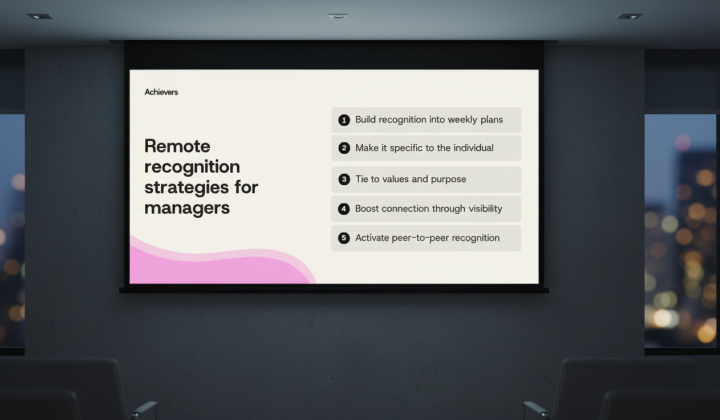
Managers can implement five core strategies to recognize remote employees successfully:
- Integrate recognition into regular weekly management routines.
- Tailor acknowledgment to the specific individual and their contributions.
- Connect recognition to the company's core values and mission.
- Use visibility tools to strengthen bonds between team members.
- Encourage and activate peer-to-peer recognition among colleagues.
Common pitfalls in recognition programs that managers should avoid are:
- Waiting for formal review cycles to give praise,
- Acknowledging only results while ignoring the effort behind them,
- Favoring the most visible or vocal team members,
- Over-relying on monetary rewards instead of meaningful, personal acknowledgment.
To gauge the effectiveness of their efforts, managers should track key metrics such as the frequency and distribution of recognition, consistency from leadership, and fairness across different roles, locations, and demographic groups.
According to data from the Achievers platform, it facilitates recognition at more than double the frequency of other providers.
Additionally, Achievers operates a global rewards marketplace spanning nearly 190 countries. This highlights the importance of building a recognition system that functions internationally and meets the diverse needs of a remote workforce. As remote and hybrid work models become standard, effective recognition is no longer a nice-to-have but a critical component of talent retention. A robust recognition culture directly influences employee motivation, engagement, and ultimately, an organization's overall productivity and stability.
To effectively combat the challenges of remote work recognition, it's essential to explore innovative approaches that can enhance team morale. For instance, implementing creative reward strategies can significantly uplift employee spirits and foster a more connected work environment. Discover a variety of team recognition ideas that can help bridge the gap in acknowledgment and support sustained engagement among remote staff.

Read also