Eric Schmidt Highlights Emerging Threats and Tech Advances in Ukraine’s Drone Warfare


Eric Schmidt Discusses the Shifting Landscape of Drone Warfare in Ukraine
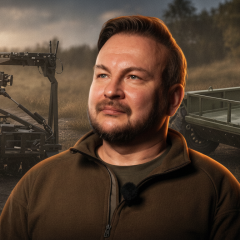
According to ХВИЛЯ: On September 8, 2026, Richard Engel interviewed Eric Schmidt, former Google CEO and Pentagon advisor, about the evolving role of drones in the conflict in Ukraine. Their conversation focused on cutting-edge military technologies, Russia’s adaptation to these new tools, and the increasing use of automated systems and artificial intelligence in the battlefield. Schmidt emphasized the growing scale of advanced weapons like the "Shahed" jet-powered drones and the complex moral, strategic, and technological challenges they pose.
Schmidt explained that the drone war is rapidly changing. Russia has begun equipping Shahed drones with small jet engines, some imported from China, each costing approximately $5,000. This development has dramatically altered the threat landscape. He noted that eight months ago, defenses against Shahed attacks were effective, but now no reliable countermeasures exist for this upgraded version. Russia plans to deploy 80,000 such drones against Ukraine by December 2026.
"I fear the situation will deteriorate significantly," Schmidt warned.
Data reveals that Swift Beat supplies three drone models responsible for about 90% of successful interceptions of Russian Shaheds. These drones operate at speeds between 160 and 240 km/h and can maneuver in groups of 5 to 10 to evade interception. While FPV drones cost between $600 and $1,000, ballistic missiles run into the millions, highlighting the cost-effectiveness of drone defense strategies.
Schmidt also pointed out that although automated guidance systems have been used in weapons for over two decades, genuinely adaptive artificial intelligence capable of learning from combat scenarios has yet to be observed in action. Still, he cautioned:
"The likelihood is very high, and in some ways, it’s already happening."
Russia’s vast video data, mesh networks, and intelligence reports could be utilized to develop self-learning algorithms, pushing the cycle of AI-driven warfare closer to reality.
According to Schmidt, victory will go to the side that rapidly transforms innovations into mass-produced capabilities. He stressed that the conflict is fought on multiple fronts: small FPV drones, guided bombs like the KAB, Shahed drones, and ballistic missiles all play crucial roles. Ukraine faces shortages of Patriot missile interceptors and relies on a mix of simple and advanced defenses to counter these diverse threats.
Five Alarming Trends
Eric Schmidt outlined five key concerns:
- an increase in ballistic missile launches,
- the proliferation of small jet engines,
- expanded use of guided KAB bombs,
- the potential for large-scale Russian mobilization,
- and the emergence of a Starlink competitor.
He remarked, "I’ve tried to help people in Ukraine grasp the AI dimension. But Ukraine is at war, and advanced AI is a complex field. This is where the West could provide truly vital support."
Schmidt also highlighted the resolve of the Ukrainian people: "They believe that if Russia wins, they and their families will be exterminated. They will not cease fighting." He expressed confidence in Ukraine’s capabilities and courage, stating, "Ukraine possesses both the means and extraordinary bravery to endure. What it urgently needs is Western assistance in funding and technology to withstand the incoming waves of attacks."
This interview sheds light on the rapid technological shifts shaping modern warfare in Ukraine. The growing reliance on drones and automated systems introduces new complexities for defense strategies that Ukraine must continuously adapt to. Schmidt’s concerns about increasing Russian threats underscore the critical need for ongoing innovation and support in Ukraine’s military efforts.
As the drone warfare landscape evolves, it's essential to understand the strategies that Ukraine is employing to counter these advanced threats. Insights from historical perspectives on Ukraine's drone tactics reveal how the nation has adapted its military approach in response to the shifting dynamics of technology and warfare. This context sheds light on the ongoing challenges and innovations in the conflict.

Read also