The Future of Warfare is Being Written in Ukraine: Drones and Tech Redefine the Battlefield

How the War in Ukraine is Being Transformed
According to ХВИЛЯ: An analysis by Kateryna Odarchenko for the Center for European Policy Analysis (CEPA) focuses on the profound transformation of warfare in Ukraine, highlighting the dominance of drones on the front lines, the explosive growth of the domestic defense sector, and a heavy reliance on commercial technologies. Modern combat in Ukraine has demonstrated that drones are now used against roughly 80-85% of frontline targets, underscoring the pivotal role of unmanned aerial vehicles in contemporary conflict.
Drone Production and a Booming Defense Industry
In the early months of the war, the Russian Federation was firing up to 60,000 artillery shells per day. In contrast, Ukraine plans to manufacture about 8 million drones this year, indicating a massive scale of unmanned systems production. The country produced around 4 million drones in 2023 and aims to build another 2 million in 2024. This output is particularly significant when compared to the production of the US and its NATO allies, which is measured in the thousands.
Ukrainian naval drones, like the MAGURA V5, have already proven highly effective, damaging Russian ships and even downing a Mi-8 helicopter over the Black Sea. Today, Ukraine produces over 50% of the weapons it uses on the front, with the majority of its long-range strike capabilities being domestically developed. This points to a growing self-sufficiency within the Ukrainian defense sector.
Ukraine's defense industry has expanded from roughly 300 companies to nearly 1,000 today, with about 80% of these firms being privately owned. The state platform Brave1 has engaged over 1,500 military-tech startups, highlighting vibrant activity in this sphere. The share of imports in Ukraine's defense procurement has decreased from 54% in 2022 to 18% in 2025, signaling a decisive shift toward domestic manufacturing.
Key elements driving this transformation include:
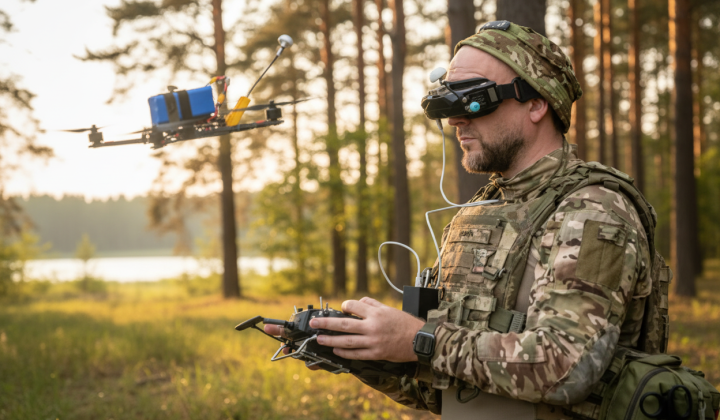
- The dominance of First-Person View (FPV) drones in close-quarters combat;
- The application of artificial intelligence and machine learning to coordinate multiple unmanned platforms;
- The utilization of commercial space assets for satellite communications, navigation, and surveillance.
"Mass is returning-in the form of thousands of cheap drones," noted Kateryna Odarchenko.
She also emphasized Ukraine's central role in global military evolution: "The future of war is being written in Ukraine-in code, in factories, and on the battlefield." These comments reflect the critical importance of technological innovation in modern warfare and the defense industry's rapid adaptation to new realities. The conflict serves as a real-world laboratory for 21st-century combat, where asymmetric tactics and agile tech development are key to survival.
This analysis underscores how technological adaptation and innovation have become critical for Ukraine's defense sector. The surge in drone production and the reduced reliance on imports demonstrate the country's drive toward military self-reliance, which directly impacts its strategic capabilities and combat effectiveness. The technological shifts observed in Ukraine may serve as a blueprint for other nations confronting similar security challenges.
The ongoing conflict in Ukraine not only showcases the effectiveness of drones but also highlights the emergence of advanced robotic technologies in warfare. As Ukrainian forces adapt to modern combat, the role of robotic infantry is becoming increasingly significant, allowing for strategic advantages without direct engagement. This evolution in military tactics reflects a broader trend towards automation on the battlefield.

Read also