Why Quantitative Forecasts Failed: 1470 Days of War and the Factors Analysts Missed

The Conflict's Duration and Flawed Predictions
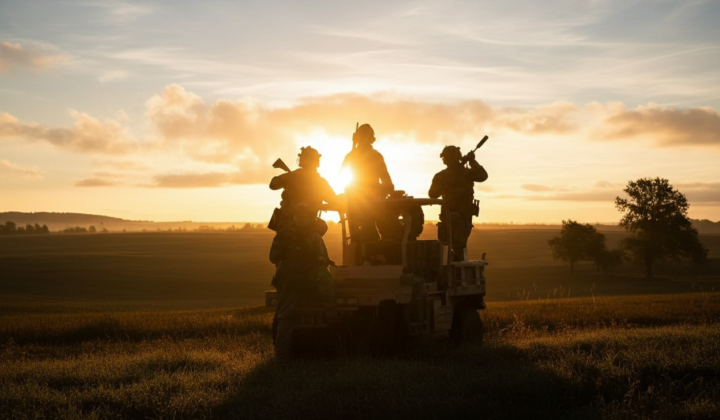
According to Главком: Russia's full-scale war against Ukraine has now lasted 1470 days, a period exceeding the duration of the Soviet Union's war against Nazi Germany. An analysis of why early predictions about the conflict's course proved inaccurate reveals that expert communities at the outset of the invasion underestimated Ukraine's capacity to fight and overestimated the strength of the Russian Federation. Many forecasts relied on quantitative metrics, such as the output of Russia's military-industrial complex and its troop numbers, but failed to account for the crucial qualitative factors that have defined the actual reality of the war. This oversight highlights a common analytical trap in modern conflict assessment.
The Qualitative Drivers of Ukrainian Success
Among these decisive qualitative factors are:
- The networked resilience of Ukrainian society;
- The institutional flexibility of the Ukrainian Armed Forces (UAF);
- A functional asymmetry in how operational information is perceived and processed.
The networked resilience of Ukrainian society, marked by a phenomenon of horizontal legitimacy, enabled the rapid mobilization of resources and widespread popular support. The institutional flexibility of the UAF allowed for swift adaptation to rapidly changing frontline conditions, which has been a critical factor in countering the aggressor.
Furthermore, the Ukrainian side demonstrated a remarkable ability to integrate civilian technologies, such as Starlink and commercial drones, into its military architecture in real time. This significantly enhanced combat effectiveness and operational command. In stark contrast, Russian strategy has been hamstrung by its Soviet legacy, particularly its centralized command structure and rigid doctrinal reliance on mass artillery barrages, which reduced its adaptability to modern warfare conditions.
Conclusions drawn from the ongoing conflict confirm that forecasts based solely on quantitative indicators fail to capture the full picture. The qualitative factors underpinning Ukraine's resilience and battlefield success have proven decisive in shaping the war's character.
Given these circumstances, it is clear that the war between Russia and Ukraine is not merely a military confrontation but also a social and technological one. Through its adaptability and innovation, Ukraine has managed to alter the course of the conflict, while Russian strategy has shown itself unprepared for the challenges of contemporary warfare. This underscores the vital importance of a comprehensive conflict analysis that incorporates both quantitative and qualitative factors.

Read also