Visa to Canada - How to Obtain for Ukrainians and What Types of Visas Exist


Canada remains one of the most attractive countries for Ukrainians planning tourist trips, studying, working, or permanent residence. Thanks to simplified procedures and a friendly immigration policy, Canada welcomes thousands of Ukrainian citizens every year.
However, unlike many European countries, Ukrainians usually need a visa for entry into Canada. The only exceptions are holders of Canadian passports or residence permits. Understanding the types of visas, applicant requirements, and the application process is critical for successfully obtaining entry permission. As of 2026, Canada offers various visa programs, including tourist, student, work, and immigration visas. Additionally, special urgent relocation programs are in place for Ukrainians affected by the war (other conditions for obtaining a visa to Canada).
What is a Visa to Canada and Its Main Types
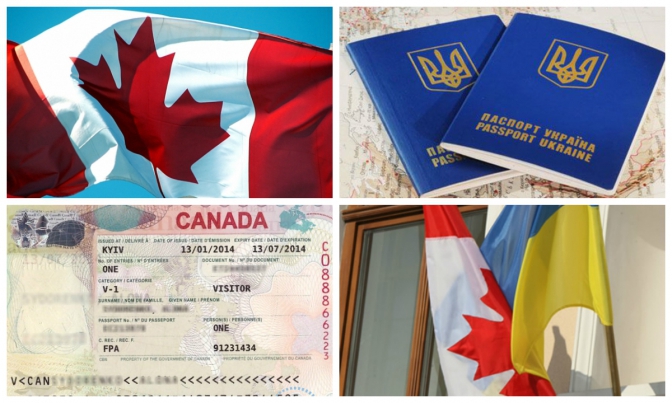
A visa to Canada is an official document that grants a foreigner the right to enter and temporarily stay in the country for a specific purpose. The visa is affixed to the passport or issued in the form of an electronic permit. The main types of Canadian visas (basis for how to obtain a visa to Canada) include:
- tourist visa (Temporary Resident Visa, TRV);
- student visa (Study Permit);
- work visa (Work Permit);
- immigration visa (for permanent residence).
Additionally, there is an electronic travel authorization required for citizens of visa-waiver countries, but this system is not yet in effect for Ukraine, except for holders of a Canadian visa issued in the last 10 years or a valid American visa.
The tourist visa (TRV) allows travel within Canada, visiting relatives, participating in conferences, or job searching (without the right to employment). It is typically issued for up to 10 years or for the passport's validity period, but the maximum length of stay for one visit does not exceed 6 months. The student visa (Study Permit) grants the right to study at Canadian institutions for programs lasting more than 6 months. It also allows working up to 20 hours per week during studies and full-time during breaks. The work visa (Work Permit) is granted for temporary employment under contract with a Canadian employer. Separate programs for youth and seasonal workers are also highlighted.
Requirements for Obtaining a Canadian Visa for Ukrainian Citizens
To obtain a Canadian visa, Ukrainians must meet several requirements demonstrating their good faith and lack of intention to stay in Canada illegally. A key requirement is proving that after the allowed length of stay, the applicant will leave Canada. For this, it is necessary to provide evidence of social, economic, or family ties in Ukraine: ownership of property, work, family, business.
The second important condition is financial capability. The applicant must prove that they have sufficient funds to cover living, food, return ticket, and medical insurance for the entire period of stay. For a student visa, it is required to confirm the payment of tuition for the first year (at least 20,000 Canadian dollars). The third condition is health status. In some cases (such as for work or student visas), a medical examination may be required. The fourth condition is the absence of a criminal record. Most visas require a clearance certificate. The fifth condition is the intention to comply with Canadian laws. This is confirmed by providing reliable information and the absence of immigration law violations in the past.
Ways to Apply for a Visa to Canada Depending on the Purpose of the Trip
The choice of the visa application method directly depends on the purpose of the trip. The simplest and fastest is obtaining a tourist visa (TRV). For this, you need to fill out an online application on the official Immigration, Refugees and Citizenship Canada website, upload scanned copies of documents (passport, photos, financial guarantees, travel itinerary), and pay a consular fee of approximately 100 Canadian dollars.
After submitting the application, biometric registration may be required (taking fingerprints and photographs), which is conducted at the Canadian visa center in Kyiv or Lviv. The decision is usually made within 30-60 days. For a student visa, you must first obtain an invitation from a Canadian educational institution (Letter of Acceptance). Then, fill out a special application, add proof of tuition payment, a bank statement proving sufficient funds (at least 20,000 CAD per year), and an academic plan. For a work visa, you must have an official employment contract with a Canadian employer. Usually, the employer must obtain a positive Labour Market Impact Assessment (LMIA), which confirms that no Canadian is vying for that position. However, some professions and programs (such as international mobility) are exempt from LMIA. Certain categories of Ukrainians (for example, participants in the CUAET program) can apply for a visa through a simplified procedure.
Procedure for Submitting a Visa Application to Canada
The process of submitting an application for a Canadian visa consists of several sequential stages. The first stage is determining the type of visa and checking the requirements. The applicant must carefully review the criteria for the chosen category. The second stage is document collection. The list includes a foreign passport (valid for at least 6 months after the planned trip), 2 photos, a bank statement about financial status, a certificate from the workplace, hotel reservation, or an invitation letter from relatives, medical insurance.
Additionally for students: an invitation letter from the school/university. The third stage is filling out the online form on the IRCC portal. The form requires detailed information about education, work, travel for the last 10 years, military service, family composition. The fourth stage is paying the consular fee (around 100 CAD) and the biometric fee (around 85 CAD). The fifth stage is biometric registration. After submitting the application, the applicant receives a letter inviting them to submit fingerprints at the Canadian visa center. This procedure must be completed within 30 days. The sixth stage is waiting for a decision. The review period may last from 4 to 12 weeks. In some cases, the embassy may invite for an interview.
The seventh stage is receiving the visa. If the decision is positive, the passport with the visa is returned to the applicant. The visa may be issued for up to 10 years. Important: having a visa does not guarantee automatic entry; the final decision is made by a border officer.
Necessary Documents for Obtaining a Canadian Visa
Successfully obtaining a Canadian visa is impossible without a carefully prepared package of documents. The mandatory list includes:
- Foreign passport (a scanned copy of all pages with stamps)
- Two photographs (according to Canadian requirements: 50x70 mm, matte, neutral background)
- Copy of the internal passport (pages with surname and residency registration)
- Bank statement for the last 6 months (balance: for one person ~ 5-10 thousand CAD)
- Certificate from the workplace stating position, tenure, and salary
- Hotel reservation or invitation letter from relatives/friends
- Return plane ticket
- Medical insurance with coverage of at least 30 thousand CAD
- Tax declaration for the previous year (if available)
- Criminal record certificate (for stays longer than 6 months)
- For minors: a copy of the birth certificate, parents' consent for traveling
For students additionally: an invitation letter from a Canadian educational institution, receipt for the first-year tuition payment, and explanation of the study purpose.
For workers: employment contract with a Canadian employer, LMIA certificate (if required). All documents must be submitted in PDF format. Texts in Ukrainian or Russian must be translated into English or French by a certified translator. The absence of even one document can lead to refusal. It is recommended to attach additional evidence of ties to Ukraine: ownership certificate for an apartment, marriage contract, documents regarding children.
Review of the Application and Timeframes for Receiving a Decision
After submitting the visa application and undergoing biometric registration, the process of reviewing the case begins by officers of the Canadian immigration service. This process is complex and involves verifying the provided data through various databases, including police, immigration, and intelligence systems. The overall review time depends on the type of visa, the workload of the specific visa office, and the completeness of the provided documents. As of 2026, for Ukrainian citizens applying for a tourist visa, the average review time is from 4 to 8 weeks.
For student visas, this timeframe can reach 10-12 weeks as it requires additional verification of the educational institution and financial capability. Work visas are usually reviewed in an average of 8-10 weeks but may take longer if additional verification of the employer or LMIA is needed. It's essential to understand that the specified timelines are approximate. During peak seasons (spring-summer), the waiting time may increase. Applicants can track the status of their application online through a personal account on the IRCC portal. At certain stages (for example, after document verification is complete), the status changes.
After a decision is made, the applicant receives a notice to submit their passport for visa stamping (in case of approval) or a letter explaining the reasons for refusal (in case of denial). Sometimes, the review may drag on due to the necessity of undergoing additional checks (security screening). This affects individuals who have experience residing in high-risk countries or whose names match data of people wanted. In such cases, the review period may extend up to 6-8 months. The applicant cannot expedite the review but can send status inquiries through a web form, but no more frequently than once a month. It is recommended to apply for a visa in advance, at least 3 months before the planned trip, especially for travel during peak seasons.
Reasons for Visa Refusal and Typical Mistakes by Applicants
Visa refusal is quite common, and most refusals are associated with typical mistakes made by applicants. The most common reason for refusal is insufficient evidence of ties to the country of permanent residence. The officer must be confident that the applicant will return home after the visa ends. A lack of work, property, family, or business in Ukraine is considered a high risk of illegal departure.
The second reason is insufficient financial resources. If the applicant cannot prove that they have enough funds for living, food, return ticket, and medical insurance, the officer will refuse. The third reason is a mismatch between the trip purpose and declared goals. For example, if a person claims a tourist trip but cannot explain the itinerary, has no bookings or invitations. The fourth reason is providing false information or forged documents. Even minor inaccuracies in the application or discrepancies in the submitted certificates can lead to a refusal and result in the applicant being blacklisted for 5 years.
The fifth reason is having a criminal record or administrative violations (for example, overstaying in other countries). The sixth reason is medical contraindications. Certain diseases (active tuberculosis, certain mental disorders) make a person inadmissible for entry. The seventh reason is the absence of necessary documents. For example, for a student visa, payment confirmation for tuition is mandatory. The eighth error is incorrectly completed application. Incorrect date of birth, name mistakes, photos not meeting requirements - all this leads to automatic refusal.
The ninth error is submitting an application without prior checking the profile. Sometimes applicants do not consider that previous visa refusals (even for other countries) may affect the decision. The tenth error is incorrect choice of visa type. For example, attempting to obtain a tourist visa for long-term study. In case of refusal, the applicant receives a letter stating the reasons. They have the right to file an appeal or reapply, but it is advisable to address all shortcomings before doing so. Consulting with an immigration lawyer significantly increases the chances of approval.

Read also