Life Under Fire: Zaporizhzhia's Resilience Just 12 Miles from the Front Line

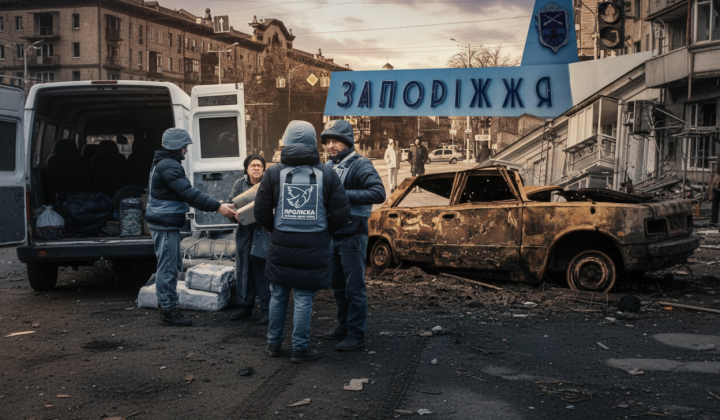
Zaporizhzhia's Wartime Reality
According to Главком: Located a mere 20 kilometers from the front line, the Ukrainian city of Zaporizhzhia endures a daily reality of relentless shelling. The city's population, which stood at 710,000 on January 1, 2022, has since fallen to 620,000, including 155,000 internally displaced persons. Since the full-scale invasion began, nearly 4,000 residential buildings have been damaged, and the winter of 2025/2026 saw the city suffer through several major blackouts. This frontline city's experience is a stark example of urban life under constant military threat.
Despite the dangers, Zaporizhzhia's economy shows signs of resilience with over 39,000 small and medium-sized enterprises currently operating, a 4.2% increase since the start of 2025. The education system also adapts: 33 full-time and 100 part-time kindergartens function alongside 99 schools, 97 of which use a hybrid of in-person and remote learning. Approximately 50,000 students attend in-person classes, over 41,000 of them within the city itself. Schools offering in-person instruction are equipped with shelters, whose locations are publicized on public transport, official government channels, and the 'Diia' app.
Military Pressure and Community Response
The military situation around Zaporizhzhia remains tense, with Russian forces attempting advances near Stepnohirsk, from Orikhiv and Huliaipole. The city is targeted with ballistic missiles, guided aerial bombs, various types of drones, and multiple-launch rocket systems. The Kosmicznyi and Shevchenkivskyi districts have sustained the most destruction, with damage to civilian and energy infrastructure, homes, schools, and medical facilities.
In response, community initiatives provide crucial support. The rapid response team from the 'Artak Together to the Dream' charity foundation arrives at impact sites within 30 minutes of an attack. Meanwhile, the 'Kubilnia' space, which opened in December 2025, was visited by around 500 people in January 2026 alone. A state grant program called 'Own Business' has provided funding of 500,000 hryvnias. Residents report growing strain from the constant attacks.
"There are still plenty of people in the city overall. But many have left, even among my acquaintances," notes Maria Padalko.
Father Andrii Bukhvak emphasizes that
"lately we feel more signs of the war's presence... However, we can observe people's emotional exhaustion."
Yet, daily life persists. Stores, cafes, and theaters continue to operate, while exhibitions and art centers open their doors.
"First and foremost, it's about pre-medical aid. And then everything else that people need," states Danyil Pichikin.
The authorities are implementing measures to protect critical infrastructure, which automatically switches to backup power sources. Local entrepreneurs and educators strive to maintain the city's normal functioning.
"We remembered well how difficult it is to start everything from scratch... That's why the decision to stay was a conscious one," underscores Anna Torina.
As Dmytro Sniehiryov states,
"The Russians' task is to create a humanitarian crisis in the city, to provoke mass migration processes deeper into Ukraine."
The situation in Zaporizhzhia reflects the profound challenges faced by many Ukrainian cities during the ongoing war. Despite the military threat, local communities demonstrate remarkable resilience in their effort to preserve a semblance of normal life, showcasing their capacity to adapt to harsh new conditions. The continued operation of businesses, educational institutions, and cultural initiatives underscores the inhabitants' determination to rebuild and develop, even amidst profound uncertainty.

Read also