Former US Trade Representative Blames Free Trade for Decline of Industry

Criticism of the Free Trade System
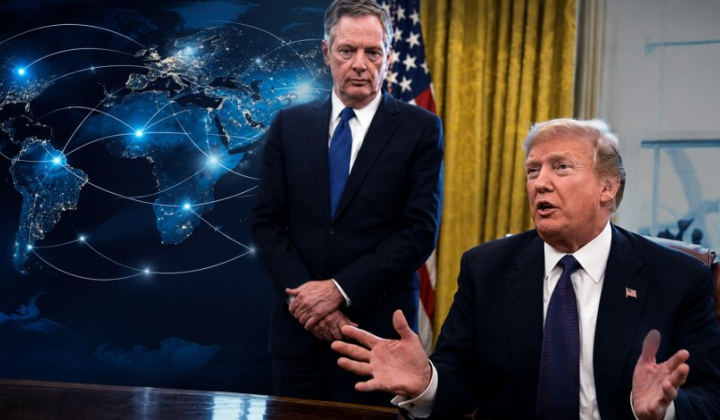
According to ХВИЛЯ: In a recent interview for Foreign Affairs, former US Trade Representative Robert Lighthizer criticized the free trade system, which he believes has led to the decline of American industry. He suggests replacing this system with a model of balanced trade. Lighthizer analyzed the history of US trade policy, particularly the mistakes made in the 1990s, such as NAFTA, the establishment of the World Trade Organization (WTO), and granting China permanent most-favored-nation status. He also discussed the consequences of trade deficits, issues of reindustrialization, relations with Mexico and Canada, as well as national security concerns.
Lighthizer, who served as Deputy Trade Representative in the 1980s, noted that until the 1870s, the US had budget surpluses. By the 1890s, the country became the world's largest economy, surpassing Britain. After World War II, the General Agreement on Tariffs and Trade (GATT) initiated a period of nine rounds of negotiations. In the 1980s, the Reagan administration implemented protectionist measures in some sectors, such as motorcycle and semiconductor manufacturing.
The Trinity of Folly and Its Consequences
Lighthizer refers to the 1990s as the 'trinity of folly,' highlighting three key events: NAFTA, the Uruguay Round that led to the creation of the WTO, and granting China permanent most-favored-nation status. He emphasizes that since 1980, China's most-favored-nation status could have been revoked annually, but it became permanent in 1999. Rough estimates suggest that relocating factories to China has resulted in the loss of five million jobs in the US. The current net international investment position of the US stands at negative $27 trillion, whereas it was negative $2 trillion 20 years ago. Lighthizer points out that by 2000, the average US GDP growth exceeded 3%, while since then it has been around 2%. The real US trade deficit is estimated by Lighthizer to be $1.5 trillion.
Additionally, Lighthizer draws attention to the challenges associated with reindustrialization in the US. He notes that after China's accession to the WTO, the incomes of American workers stagnated for nearly 15 years. Two-thirds of the American workforce do not have higher education, leading to a decline in their life expectancy due to despair, suicides, and drug abuse. Lighthizer also mentions that during Trump's second term, approximately 70,000 industrial jobs were lost, whereas from the start of his first term to 2019, the industry added 500,000 jobs.
'In free trade, almost no one really believes, except for a few economics professors' - Robert Lighthizer
In his analysis, Lighthizer emphasizes the importance of national security and export controls, as well as the need for strategic delineation with China. He supports the idea of a new agreement with Mexico and Canada, noting that 'USMCA and NAFTA are essentially two agreements, not one.' Lighthizer also expresses concerns about uncertainty in tariff issues, stressing that businesses will invest in America if they are assured of the permanence of tariffs.
Lighthizer believes that countries with large trade surpluses with the US should pay tariffs. He states that 'the system is broken,' and that 'the answer to modern challenges lies not in free trade, but in balanced trade.' 'It matters who owns your country,' he underscores, calling for new approaches in trade policy.
Lighthizer concluded the interview on an optimistic note, noting that 'the first signs are encouraging,' particularly the increase in job openings in the industry and capital expenditures. He hopes that the US can restore its industry if existing problems are resolved and stability in trade policy is ensured.
Lighthizer's statements reflect a broader discussion about the future of US trade policy, especially in the context of growing global competition and changes in international relations. His criticism of free trade and proposals for a balanced model indicate the possibility of reevaluating approaches to foreign trade, which could have significant repercussions for the American economy and workforce. In a changing economic landscape, the issues of reindustrialization and competitiveness remain pressing for politicians and business leaders, which could impact future trade agreements and strategies.
While the former US Trade Representative highlights the negative effects of free trade on the American economy, there is also an active discussion in the European Union about escalating trade relations with China. A large-scale trade war with Beijing may become a response to similar challenges arising from globalization and economic competition.

Read also