Zelenskyy Details Russia-Iran Military Alliance: Intelligence Sharing and War Experience

Deepening Military Ties Between Russia and Iran
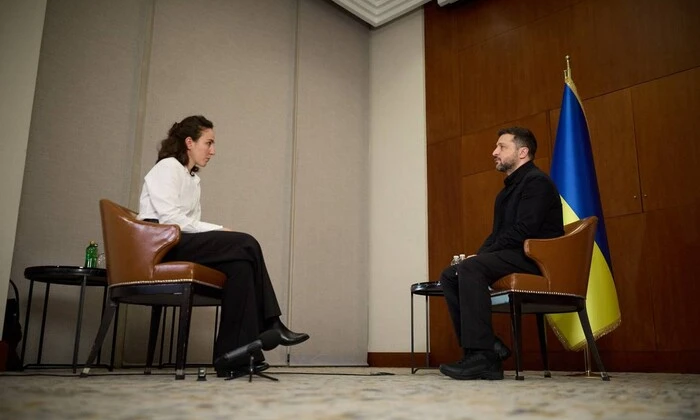
According to Главком: In an interview with the Associated Press, Ukrainian President Volodymyr Zelenskyy provided specific examples of a growing military partnership between Russia and Iran, centered on intelligence sharing and the transfer of battlefield expertise. He revealed that Russia has supplied Iran with satellite intelligence on Israel's energy infrastructure, detailing approximately 50 to 53 civilian sites with no military purpose. This data could enable Iran to target these Israeli facilities more effectively.
Zelenskyy drew a direct parallel to the experience of Ukrainians under Russian bombardment, where attacks deliberately target power grids and water supply systems. He further stated that 'all the experience Russia has gained in its war against Ukraine is being transferred to Iran.' For instance, the drones Iran uses are analogues of Russian 'Shahed' models, rebranded and upgraded to newer versions. This collaboration highlights how Moscow is exporting tactics and technology tested in Ukraine to other global flashpoints.
Ukraine's Strategy to Break a Naval Blockade
President Zelenskyy also addressed Russia's earlier blockade of Ukraine's food corridor in the Black Sea.
'We faced a similar problem when Russia blocked our food corridor in the Black Sea. They used a wide array of means for the blockade-not only warships but also helicopters, missiles, fighter jets, and much more,' he noted.
According to him, Ukraine's destruction of a significant portion of Russia's Black Sea Fleet forced the adversary to retreat from the corridor. Ukraine subsequently organized convoys for civilian vessels, utilizing maritime drones to counter ongoing Russian attacks.
The Black Sea food corridor is now under Ukrainian control and operating successfully. President Zelenskyy emphasized Ukraine's readiness to share its hard-won expertise to help protect strategic waterways like the Strait of Hormuz, clarifying that partners are seeking consultations, not direct military intervention. Ukraine's success in breaking the blockade demonstrates a capacity for innovative asymmetric warfare that is drawing international attention.
President Zelenskyy's statements underscore significant regional security challenges stemming from the Russia-Iran military partnership. The transfer of intelligence and military technology could substantially impact the Middle East, particularly the tense relations between Iran and Israel. Furthermore, Ukraine's proven experience in countering maritime threats and blockades offers valuable lessons for other nations facing similar coercion, marking its emergence as a key player in global security discussions.
In light of Zelenskyy's recent revelations about the military collaboration between Russia and Iran, it is crucial to understand the broader implications of such alliances. The sharing of intelligence not only enhances Iran's capabilities but also serves as a strategic move by Russia to undermine Western support for Ukraine. For a deeper insight into how these developments may affect U.S. aid to Ukraine, read more about Russia's tactics to influence U.S. assistance.

Read also